Owners: John Nimmo & Sons Ltd. (Glasgow)
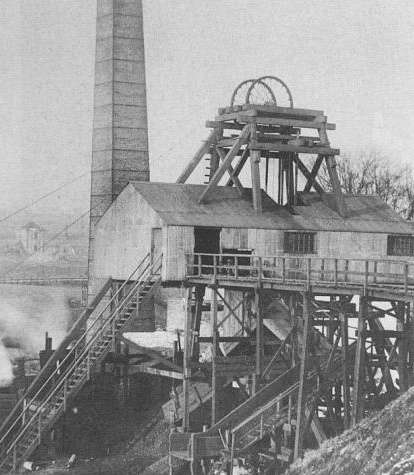
The Wallsend No. 6 Pit of the Rosebank Colliery, in the
Parkneuk area of Dunfermline, was located 450 yards to the
west-north-west of the Victoria Pit, Wellwood, and just 100 yards
south-west of the site of the early Wallsend Elgin
Pit.
The Wallsend No. 6 Pit is believed to have opened around 1902
under John Nimmo & Sons. The pit finally closed in the summer of
1918.
[Note: This Wallsend Pit location must not be confused
with the Wallsend (or Killiebone) pits to the north of
Townhill in the Bowershall area, west of Loch Fitty.]
M. Martin & Webmasters
 |
|
| Source Date of Information Supplied (Owners) |
|---|
| Manager / Under-Manager / Men underground / Men above ground / Coal seams worked |
| 1904 (John Nimmo & Sons Ltd.) |
| John Clark, manager. |
| 1915 (John Nimmo & Sons Ltd.) |
| Jun: Departure of Mr George Hunter, under-manager. |
| 1918 (John Nimmo & Sons Ltd.) |
| Wallsend No. 6, Rosebank, abandoned 24 June, 1918. |
| See West Fife entry for Rosebank Pits and Mines
for information on coals worked at Rosebank Colliery. Some seam compositions relate to this Rosebank No. 6 Pit. |
Information on coals worked at the Wallsend No. 6 Pit, Dunfermline
(based on reports from 1900 and 1930)
The name "Wallsend" was apparently an old name
for the Dunfermline Splint Coal seam. Here, at the western
side of the Dunfermline coalfield in the Wallsend No. 6 Pit,
Rosebank Colliery, the Dunfermline Splint Coal was 3 ft. 8
in. thick and had a pavement of sandstone 10 ft. thick and a
cover of 6 ft. of shale.
Above the Splint Coal, and separated from it by some 10 or
15 ft. of black carbonaceous and sandy shales, lay the seam
known as the Two Foot Coal but, not true to its name, the Two
Foot seam was only 1 ft. 3 in. thick!
This seam appeared to have been worked to a considerable
extent in former times by shallow pits sunk along its
outcrop, but it was not used around 1900.
The important Five Foot Coal seam lay 12 or 13 fathoms above the Dunfermline Splint and a section of the seam had the following composition:
| Five Foot Coal seam (Wallsend No. 6) | |
| Blaes | - |
| Coal | 2 ft. 8 in. |
| Stone | 3 in. |
| Coal | 10 in. |
| Blaes | - |
The Swallowdrum Coal was a single seam in the Wallsend No. 6 Pit where it was 5 ft. 2 in. thick. The Six Foot, or Swallowdrum Five Foot Coal seam, at the top of the Main Group of coals, was correlated with the Kelty Main Coal. Its extent was limited to the northern half of the Dunfermline coalfield in the vicinity of Rosebank and Wellwood. It was a good steam coal.
| Six Foot Coal seam (Wallsend No. 6) | |
| Blaes | - |
| Coal | 2 ft. 6 in. |
| Bituminous stone | 3 in. |
| Coal | 3 ft. |
| Sandstone plies | - |
About 17 fathoms of strata, largely consisting of thick
sandstones with blaes beds and a fireclay, overlay the Six
Foot Coal. Above these sandstones lay three coals separated
by partings: the Seven Foot, the Quarry and the Three Foot
Coals.
In the north-east of the district, however, there was only
one coal, a thick composite seam called the Fourteen Foot
Coal.
A section of the Seven Foot Coal, also called the Lower
Seven Foot, was part of the Fourteen Foot Coal. A section
wrought at Wallsend No. 6, as a steam coal, was recorded
as:
| Seven Foot Coal seam (Wallsend No. 6) | |
| Blaes | - |
| Coal | 3 ft. 2 in. |
| Parting | 4 in. |
| Coal | 2 ft. 1 in. |
| Fireclay and fakes | - |
The Quarry Coal, also a steam coal and sometimes referred to as the Upper Seven Foot Coal, was thought to be another portion of the Fourteen Foot Coal.
A section of this seam at the Wallsend No. 6 Pit had the following composition:
| Quarry Coal seam (Wallsend No. 6) | |
| Faky blaes | - |
| Coal | 2 ft. |
| Bituminous stone | 5 in. |
| Coal | 1 ft.7 in. |
| Blaes | 1 ft. 3 in. |
| Sandstone | - |
| Plans of Abandoned Seams for Wallsend Pit, Rosebank | Pits or Mines designated in Plans |
|---|---|
| COAL; Five Feet; Eight Feet; Fourteen Feet; Duddie Davie; Ell; Splint (1915) |
Baldridge, Balmule, Drumtuthil, Hunter, Tom,
Wallsend
[Rosebank] |
| COAL; Upper Swallowdrum or Four Feet; Upper Eight Feet; Lower Eight Feet; Ell or Lower Swallowdrum; Six Feet or Swallowdrum Five Feet; Five Feet (April, 1917). Silkstone outcrop workings at Little Honesty Pits (January, 1927). | Little
Honesty, Victoria, Wallsend No. 6
[Rosebank] |
-------------------------------------------------
"Dunfermline Press"
4 May, 1901
Alexander Mackay, miner, Castle Row, Milesmark, met with an accident on Saturday in the Wallsend Pit, Rosebank Colliery. He had been employed in deepening the shaft, and while the cage was being drawn to the surface, it left the slides at about twenty feet from the bottom, and came in contact with the scaffold erected round the water pipe, knocking away a plank about ten feet long. The plank fell to the bottom and struck Mackay on the left jaw and the right knee. Two of his teeth were knocked out, and his knee was severely bruised.
-------------------------------------------------
"Dunfermline Press"
7 March, 1903
While Thomas Burt, miner, Whitemyre, was braking a hutch on a wheel brae in the Wallsend Pit, Rosebank Colliery, on Monday, he was struck by the empty hutch which was coming up the brae, and was jammed against a tree. His left leg was fractured a little above the ankle. He was attended to by Dr Tuke.
-------------------------------------------------

"Dunfermline Press"
21 May, 1904
On Saturday morning, an accident which terminated fatally, occurred in the underground workings of the Wallsend Pit, Rosebank Colliery (Messrs Nimmo & Sons). A pit-bottomer, named Joseph Young, who resided at 92 Golfdrum Street, Dunfermline, was in the act of putting a hutch on to a cage at the low bottom, when, owing to some misunderstanding of the signals, the cage was unexpectedly raised. Young was caught between the cage and the top of the doorway. Hi skull was fractured and he was otherwise injured, and he died within an hour after being admitted to the Dunfermline Cottage Hospital. Deceased was forty-five years of age. He was married, and leaves a widow and family.
"Dunfermline Press"
28 May, 1904
Under the Fatal Accidents Inquiry Act, an inquiry was held in the Sheriff Court, Dunfermline, on Thursday - before Sheriff Shennan and a jury - into the circumstances attending the death of a miner named Joseph Young, lately residing at 92 Golfdrum Street, Dunfermline, who was injured, on 14 May, in No. 6 Wallsend Pit, Rosebank Colliery. Those giving evidence included:- John Clark, manager; George Innes, pit-drawer, 41 Golfdrum Street; David Hynd, drawer, 3 Victoria Street, Dunfermline; James Hunter (18), fireman, Parkneuk; and Robert Moodie, engineman.
-------------------------------------------------
"Dunfermline Press"
16 July, 1904
Much interest was created in connection with the charges brought in the Dunfermline Sheriff Court on Thursday arising out of the recent fatality at Wallsend Pit, Rosebank Colliery, Dunfermline. Robert Moodie, winding engineman, Cottage Row, Milesmark, Dunfermline, was placed in the dock on a charge of contravening the Coal Mines Regulation Acts, in respect that, on 14th May 1904, while employed as winding engineman at the pit, and when in charge of the engine, he allowed James Hunter, fireman, Parkneuk, to take charge of the engine, and to raise and lower the cage, and that he failed to prohibit Hunter from interfering with the engine in any way while it was being worked, and did allow Hunter to enter or remain in the engine house without his having received authority. Moodie rendered a plea of not guilty and was defended by Mr A. P. Macbain (for Mr Jas. Currie Macbeth, solicitor).
Those giving evidence included:- Andrew Hynd,
apprentice engineer, Dreghorn, Ayrshire; James Lawrie, pitheadman,
25 Rumblingwell, Dunfermline; Robert Neilson, pithead worker, 189
Baldridgeburn; James Hunter (18), fireman, Parkneuk; James Young,
15 Rumblingwell; George Russell, winding engineman, 40 Union
Street, Cowdenbeath; and John Clark, manager.
The charge was deserted but John Clark was
afterwards charged with a breach of the rules in respect of his
permitting Moodie to allow Hunter to work the
engine.
-------------------------------------------------
"Dunfermline Press"
6 August, 1904
Although John Clark, colliery manager, was charged with contravening section 51 of the Coal Mines Regulation Act, 1877, and Special Rule 29, by not prohibiting James Hunter, fireman, Parkneuk, who was less than 22 years of age, and not qualified to act as winding engineman, from working the engine at Wallsend Pit, of the Rosebank Colliery, on particular dates libelled, Sheriff Shennan, Dunfermline Sheriff Court, found the charge not proved. His Lordship thought it was not an illegal action for the manager to authorise a competent person under rule 22 to assist the engineman to raise and lower material.
-------------------------------------------------
"Dunfermline Press"
29 October, 1904
Robert Allan, miner, Carnock, had his right leg fractured above the ankle in the Swallowdrum seam of Wallsend Pit, Dunfermline, on Wednesday forenoon. He was engaged "holing" when a stone, weighing about three quarters of a cwt., fell from the roof.
-------------------------------------------------
"Dunfermline Press"
27 June, 1908
Between three and four o'clock yesterday morning, George Simpson, sen., miner, Rumblingwell, received injuries to his neck and breast through a stone falling upon him while he was at work in Messrs Nimmo & Sons' Wallsend Pit.
-------------------------------------------------
"Dunfermline Press"
2 January, 1909
EXPLOSION IN WALLSEND PIT
MINER TERRIBLY INJURED
A shocking accident occurred in Messrs John Nimmo & Sons' Wallsend Pit, Dunfermline, at an early hour on Monday morning. The victim was George Sneddon, a brusher, residing at Front Row, Milesmark. Sneddon had been engaged at blasting operations during the night. He had bored a hole and was in the act of stemming the shot, when the gelignite cartridges prematurely exploded. The unfortunate man received the full force of the explosion, and sustained terrible injuries about the face, arms, hands, and upper parts of the body. With all haste Sneddon was removed to the Dunfermline and West Fife Hospital. It was at first feared that he might lose the sight of both eyes. Happily, however, the medical attendants are now hopeful that that dire calamity will not result. It was found necessary, however, to amputate the left hand and to remove the forefinger of the right hand, which was badly mutilated. Sneddon, at the time the explosion occurred, was using a wooden stemmer, one of the safest instruments which can be utilised for the purpose. The accident is therefore inexplicable unless it be that the keen frost which prevailed between Sunday night and Monday morning so affected the gelignite as to render it more liable to explode. Sneddon still lies in the Hospital in a precarious condition. He is married, and has a wife and six children dependent upon him.
-------------------------------------------------
"Dunfermline Press"
23 October, 1909
A FATAL FALL AT WALLSEND
James Meiklejohn, about sixty years of age, a miner, residing at Nisbet's Buildings, Baldridgeburn, Dunfermline, met with fatal injuries yesterday morning in the Wallsend Pit, Rosebank Colliery, Dunfermline, wrought by Messrs John Nimmo & Son. Deceased, who was on the night shift, was engaged in what is known as No. 1 brae of the lower eight feet seam, when a large stone fell from the brushing face. Meiklejohn was struck on the chest, and when picked up by fellow-workmen, it was found that he was suffering from severe internal injuries. With all speed the ambulance waggon was summoned to the pit head. The injured man succumbed while being conveyed to the Dunfermline and West Fife Hospital.
----------------------------
"Dunfermline Press"
13 November, 1909
Under the Fatal Accidents Inquiry Act, an inquiry was held in the Sheriff Court, Dunfermline, on Thursday - before Sheriff Shennan and a Jury - into the circumstances attending the death of a miner named James Meiklejohn, lately residing at Nisbet's Buildings, Baldridgeburn, who met with fatal injuries by a fall from the roof in Wallsend Pit, Dunfermline, on the morning of 22 October. Those giving evidence at the inquiry included:- John Clark, manager; Thomas Spowart, miner, Baldridgeburn; Adam Meiklejohn, miner, a son of deceased; Andrew Malcolmson, brusher; and Robert Hynd, fireman. A formal verdict was returned by the jury.
-------------------------------------------------
"Dunfermline Press"
Saturday, January 28, 1911
ACCIDENT AT WALLSEND PIT.
Andrew Strachan, miner, Gillespie's Buildings, Whitemyre, was admitted to the Dunfermline and West Fife Hospital on Monday afternoon suffering from severe injuries received in Messrs John Nimmo & Son's Wallsend Pit. Strachan was engaged in the Five Feet Swallowdrum section when a large stone came away unexpectedly from the roof. The stone struck Strachan on the back inflicting serious internal injuries. On the man being conveyed home he was examined by Dr Mallice, who ordered his removal to Hospital. Strachan is making satisfactory progress towards recovery.
-------------------------------------------------
"Dunfermline Press"
24 June, 1911
DESTRUCTIVE FIRE AT ROSEBANK COLLIERY
£2000 DAMAGE
Fire was responsible for the destruction on Thursday evening of the pithead equipment of
Wallsend Pit of the Rosebank Colliery, wrought by Messrs John Nimmo & Son. The damage
which is estimated at about £2000, is covered by insurance. Two men who were watching the
bonfires in the district from the redd-bing, were the first to observe the outbreak and to apprise
the manager.
The origin of the conflagration is a mystery. It began at the tip-end and rapidly ran along the
wooden gangway to the pithead framework. The manager telephoned to the City Police
Office requesting the services of the Fire Brigade, but by the time the firemen reached the
scene, at a quarter past twelve, the fire had got a very firm hold.
Previous to their arrival, the workmen residing in the district had turned out to help. The pit
hose was brought into play, a supply of water being secured from the Blackburn stream. It was,
however, found inadequate to cope with such a fire. In order to avert the descent of the flames
into the pit, and with the purpose of keeping the smoke from affecting the six ponies which were underground, the ventilating fan was stopped.
There were about twenty waggons on the pithead at the time of the outbreak, several of
which caught fire. It was with difficulty that the remainder of them were drawn to a place of safety.
As it was, three were entirely destroyed, and two others were badly damaged.
When the Fire Brigade arrived, the firemen directed their efforts towards saving the pit shaft. The cage
had previously fallen down the shaft on account of the wire ropes breaking. Fortunately, there was
a copious supply of Glenquey water available, and soon after their arrival the extinguishers had
confined the scope of the conflagration to a restricted area. The screening plant, together
with the steam engine which drives it; forty yards of gangway, and the upper part of the
pithead framework were entirely destroyed.
The Brigade remained at work until five o'clock yesterday morning. A month or two, it is
stated, will elapse before the pithead apparatus can be renewed. It is understood that Messrs
Nimmo & Son are to endeavour to find work for the Wallsend employees, who number
between 200 and 300 men, in their adjoining pits.
Incendiarism is strongly suspected as being the cause of the fire, the official view being
that the outbreak could not have happened in any other way.
-------------------------------------------------
"Dunfermline Press"
5 August, 1911
ROSEBANK PITS
The frame and fittings of the Wallsend Pit of Rosebank Colliery, Dunfermline, which
were destroyed by fire on the night of Coronation Day, have now been almost entirely
replaced, and it is expected that the pit will be ready for re-opening at the beginning of
next week. During the time the pit has been closed only a few of the 300 men who were
thrown idle were able to secure employment in the Company's other pit, and the
majority of the men have been out of work since the fire took place.
It is the intention of Messrs John Nimmo & Son, who own the colliery to re-open two
other pits in Rosebank. The Dixie Pit, which was shut down a number of years ago after
a fire had taken place, is to be modernised. It has been decided to widen the shaft
and to fit up pumping machinery in order to cope with the water, which flooded the
working in times of wet weather. A smaller pit which adjoins the Dixie is also to be
re-opened in order to comply with statutory requirements. That pit is only sunk to the
crop seam, and it is intended to deepen it until the Dunfermline splint coal is reached.
-------------------------------------------------
"Dunfermline Press"
Saturday, October 14, 1911
FATAL RESULT OF A PIT ACCIDENT.
The death occurred in Dunfermline and West Fife Hospital this week of Andrew Strachan, miner, Gillespie's Buildings, Whitemyre, who, on 22nd January last, received serious injuries by a fall of coal from the roof in Wallsend Pit. Since that date of the accident deceased had been under treatment at the Hospital. He was married, and between thirty and forty years of age.
-----------------------
"Dunfermline Press"
Saturday, October 21, 1911
FATAL ACCIDENT AND SUDDEN DEATH INQUIRIES.
In the Dunfermline Sheriff Court on Tuesday, inquiries were held before Sheriff Umpherston and a jury with regard to the circumstances of a sudden death and two fatal accidents. There attended - Mr John S. Soutar, Procurator Fiscal; Mr R. G. M. Pritchard, H. M. Inspector of Mines; Mr A. P. MacBain, solicitor; Mr Wm. Colvin, mining engineer; and Mr James Robertson, assistant secretary of the Fife and Kinross Miners' Association. ...
A WALLSEND FATALITY
The second inquiry was with regard to the death of Andrew Strachan, miner, lately residing at Gillespie's
Buildings, Whitemyre, who died in the Dunfermline and West Fife Hospital last week as the result of an accident
which he sustained in Wallsend pit on 23rd January last.
Hugh Johnston, jun., drawer, Gowkhall, stated that he was employed as drawer to the deceased. On the day
of the accident the usual examinations were made of the place by the fireman. Shortly after noon on the 23rd
January, witness left the face where deceased was working in order to go out for an empty hutch. At that time
deceased was holing. When he returned with the hutch he heard deceased crying to him to "hurry up".
When witness got into the face, he found deceased lying amongst some props. Witness obtained assistance,
and had Strachan taken out. The place was well propped, and there was plenty of wood available if more
had been wanted.
John Readdie, miner, 29 Rumblingwell, one of the men who went to Strachan's assistance, stated that
when he saw Strachan, the latter said, "I am done for; my back is broken."
By Mr Pritchard - Deceased was a practical experienced man.
Alexander Hynd, pit fireman, 6 Parkneuk, spoke to having made the usual examinations of the place. After the
accident he found that a large stone had fallen from between two lipes in the roof. So far as he could judge,
the cause of the accident was that, when deceased began to take down his coal, he had loosened the inside
edge of the stone resting upon it. Seeing that, deceased had tried to get clear, but was only partially successful.
The lipe would not be seen until after the stone fell. The taking down of pillars, which deceased was doing,
was a risky job at the best, but deceased had six years' experience of the work, and was naturally a
careful workman. The jury returned a formal verdict.
-------------------------------------------------
"Dunfermline Press"
19 December, 1914
RE-OPENING OF ROSEBANK PITS.
After having been closed for two months, the Wallsend and Dixie Pits of Messrs John Nimmo & Son, Rosebank Colliery, have been re-opened. During the temporary stoppage, the majority of the men found employment elsewhere. There were several, however, to whom the closing of the pits caused extreme hardship.
-------------------------------------------------
"Dunfermline Press"
12 June, 1915
On Thursday evening a representation of officials and workmen of Rosebank Colliery met Mr George Hunter, late under-manager of No. 6 Pit, Rosebank Colliery, in the Co-operative Hall, on the occasion of his leaving to fill a similar position in India. ...
-------------------------------------------------
"The Scotsman"
Saturday, 30 June 1917
IMPORTANT SALE of COLLIERY PLANT, LANCASHIRE and E.E. STEAM BOILERS,
PAIR COUPLED WINDING ENGINES, WINDING and PUMPING ENGINES, COAL CUTTERS, SIROCCO
and GUIBAL VENTILATING FANS, Large Number STEEL BRIDGE and ANGLE RAILS, BRANCH RAILWAY
BUILDINGS, NEW PITWOOD, TIMBER, TOOLS, Etc, at ROSEBANK COLLIERIES, DUNFERMLINE, on FRIDAY
First, 6th July 1917, beginning at Wallsend Colliery at 11 o'clock.
SHIRLAW, ALLAN & CO., Auctioneers, Hamilton, have received instructions from Messrs John Nimmo & Son,
Ltd., Coalmasters, owing to stoppage of Wallsend and Drumtuthil Pits, to Sell, by Auction, as follows:-
2 Double-Flued Lancashire Steam Boilers, about 28 ft. by 7½ ft., by Ewing & Lawson, Glasgow, insured at 100lb.;
5 E.E. Steam Boilers, from 30 ft. by 5 ft., insured at 45 lb.; Pair Coupled Winding Engines, 18 in. cylinders, 4 ft stroke, by
Martyn Bros., Airdrie, with 2 Drums each 10 ft. dia. by 3 ft. broad; Horz. Winding Engine, 16 in. cylinder, 3½ ft. stroke,
with 8 ft. Drum; Horz. Pumping Engine, 18 in. cylinder, 3 ft, stroke; Horz Driving Engine, 14 in. cylinder, 3 ft. stroke; No. 8 (40 in. dia.)
Sirocco Centrifugal Cased Ventilating Fan, by Davidson, Belfast, almost new, capacity about 20,000 Cub. Ft., at 350 revs. per minute, ¾ in.
Water Gauge; 2 Guibal Fans, 20 ft. and 15 ft., with 12 in. and 10 in. Engines; Two 9 in. Plunger Pumps for Shaft with Connections;
Tangye Duplex Pump, 18 in. by 12 in. by 10 in.; Tangye Special Steam Pump, 10 in. by 5 in. by 12 in.; No. 7 Pulsometer Pump; Two "Baby"
Bar Coal Cutters, one new, by Mavor & Coulson, Ltd., to cut 3½ ft. deep, volts 440/500; about 2500 Yards Railway -
Permanent Rails from about 76 lbs. per yard, with Points, Crossings and Connections; about 5500 Steel Angle Pit Rails, 4 ft.
long; about 450 C.I. Pit Plates, from 4 ft. by 2 ft.; Two 20-Ton Waggon Weighing Machines, by Avery & Smith, Tables 14 ft.
and 13 ft. - one with Relieving Gear; Two 3-Ton Beam Cart Weighing Machines, by Pooley & Smith; Two 20 cwt. Hutch
Weighing Machines, by Pooley, with 3½ ft. Revolving Tables; Trestle Pithead Frame, 53 ft.; Pithead Frame, 42 ft.; 2
Pairs 8 ft. Pithead Spider Pulleys; Pair 6 ft. Bell Cranks, with Connections; Shaking Scree, 14 ft. by 4 ft., with Connections;
Set Elevators, 38 ft. between Centres, Steel Buckets 13½ in. by 10 in. by 9 in.; 3 Double-deck Cages, 3 ft. 4 in.
between Slides; 2 Single Pit Cages, 3 ft. 4 in. between Slides; 2 Heavy D.P. Pit Cranes; about 180 Hutches, with
Flanged and Edge Steel Wheels, 24 in. and 18 in. gauge; Large Number Loose Hutch Wheels and Axles, 24 in. and 18 in.
gauge; 5 Hutch Tipplers; Large Number M.I. Scree Bars and Bearers; Riddle Screen, 6 ft. by 3½ ft. by 1 in. Mesh,
with Shafting and Connections; 2 Pairs Stephen Humble's Improved Patent Detaching Hooks for 3-Ton Load, with
Connections; Large Number C.I. Flanged Steam Pipes, 9 in., 8 in., 7 in., 6 in., 4 in., and 3 in., with Bends and Branches; 15 ft.
of New 2 in. Copper Flexible Piping, with Brass connections; New I.R. Coil Suction Hose, 15 ft. by 5 in.; C.I. Wheel Valves,
from 6 in. to 2 in.; Large Number Rope Pulleys, from 6 ft.; C.I. Cousie Pulleys from 4 ft.; 6 Steel Wire Winding Ropes, 1 in.
dia., from 80 Fathoms long; Two 1 in. and ¾ in. Galvanised Flexible Steel Wire Ropes, from 80 Fathoms long; Large
Number M.I. Plates various; M.I. Pump Rod Plates; Bell Hammers and Connections; Large Quantity Cousie Chain; Edney's
Recording Mine Ventilation Gauge (Suction), by Baird & Tatlock, Glasgow; Colliery Barometers and Thermometers;
Hygrometers; Ring-Rose Patent Lubricator - 2 pint; 2 Salter's Registered Spring Balances, to 1 cwt., with Scoops; Fire
Extinguishers; 5 Safety Body Belts, for Shaft Work; Large Quantity C.I., M.I., and Steel Scrap; Light Scrap; Old Wire Ropes, etc.
Large Number Corrugated Iron Sheets.
P.P. Logs from 14 in. by 13½ in., from 27 ft. long; Short P.P. Logs various; Planks, Battens, P.P. Pump Rods; P.P.
Slides; Large Number New Pit Props, from 6 ft. by 3½ in. by 3½ in.; New Heavy Round Timber; Large Number
New and Used Pit Sleepers, from 3 ft. by 5 in. by 2 in.; Timber, various; Firewood, etc.
Also Timber of Pithead Scaffolds and Gangways, with Corrugated Iron Roofs, Brick and Wooden Erections of Engine-Houses,
Workshops, and Powder Magazines, etc.
NOTE. - The Exposers will load the Material on Railway Waggons Free of Charge.
Catalogues from Auctioneers.
Hamilton, June, 1917.
-------------------------------------------------
"The Scotsman"
4 December, 1920
OLD BRICKS FOR FIFE HOUSING SCHEME. - A brick-built chimney stalk, 112 feet high, at the disused Wallsend pit, Rosebank Colliery, near Dunfermline, was blown down by means of gelignite by employees of the Dunfermline District Committee yesterday in order to secure the bricks for the Committee's Parkneuk housing scheme. It is estimated that there will be available about 35,000 excellent quality bricks, which are to be utilised for building the foundations of twelve military huts which are to be erected in the mining hamlet for the accommodation of persons who are at present in occupancy of houses which have been condemned as uninhabitable. The demolition of the chimney removes a prominent landmark, which has been in existence since the year 1839, when Wallsend pit, then the deepest coal pit shaft in Scotland, was sunk by a former Earl of Elgin.
--------------------------------------------
"Dunfermline Press"
20 February, 1954
PARKNEUK BING TO BE REMOVED
"Redd" for Brick-Making
The National Coal Board are planning to remove the old bing of Wallsend Pit, at Parkneuk, Dunfermline, and to use the debris in the making of bricks. ... The pit has not been in operation since the pithead was destroyed by fire over forty years ago.
--------------------------------------------
