Owners: NCB
Scottish Coal
Castlehill Mine, opened in 1965, was about two miles north of Bogside Mine. Work on the underground belt-conveyor system to feed the coal-fired power station at Longannet (east of Kincardine) commenced in 1964 and relied on two drift mines at Castlehill and several other ventures to access the conveyor.
Closed on a care and maintenance basis in 1990, Castlehill was the main ventilation and second egress for the Longannet Mine.
[It is believed that the 5.5 mile belt-conveyor was reduced in length and ran from Castlehill to Longannet Mine bunkers. All coal coming from the development at Longannet was transported up this trunk belt.]
|
See also Longannet Mine (Longannet complex) entry |
|---|

|

|
 |
 |
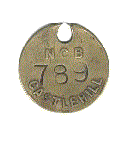 |
| This is one of the checks for Castlehill Mine. |
----------------------------------------------------------
| Mine opened: 1965 | Mine closed: 1990 |
|---|---|
| Source Date of Information Supplied | |
| Manager / Under-Manager / Men underground / Men above ground / Coal seams worked | |
| 1971 (Scottish Coal) | |
| R. C. Sinclair / J. G. Thomson : M. Peden / 558 / 125 / Steam coal. Hirst. | |
| 1973 & 1974(Scottish Coal) | |
| R. C. Sinclair / J. G. Thomson : M. Peden / 696 / 74 / Steam coal. Hirst. | |
| 1977 - 79 (Scottish Coal) | |
| G. Wilson (Agent/Manager) : G. M. Caldow (Deputy Manager) : J. G. Thomson ; W. A. Reid (Undermanagers) G. Crane (Mechanical Engineer) : W. Wilson (Electrical Engineer) / 696 / 74 / Steam coal. Hirst. |
|
| 1980 (Scottish Coal) | |
| G. Wilson (Agent/Manager) : G. M. Caldow (Deputy Manager) : J. G. Thomson ; W. A. Reid (Undermanagers) J. M. Banks (Mechanical Engineer) : W. Wilson (Electrical Engineer) / 696 / 74 / Steam coal. Hirst. |
|
| 1981 & 1982 (Scottish Coal) | |
| G. Wilson (Agent/Manager) : G. M. Caldow (Deputy Manager) : J. G. Thomson ; W. A. Reid ; G. Gilmour (Undermanagers) J. M. Banks (Mechanical Engineer) : W. Wilson (Electrical Engineer) / 696 / 74 / Steam coal. Hirst. |
|
| 1984 (Scottish Coal) | |
| C. Fox (Agent/Manager) : J. G. Thomson (Deputy Manager) : D. Bauld ; W. A. Reid ; R. Parker (Undermanagers) J. M. Banks (Mechanical Engineer) : W. Wilson (Electrical Engineer) / 696 / 73 / Steam coal. Hirst. |
|
| 1987 (Scottish Coal) | |
| C. Fox (Agent/Manager) : J. G. Thomson (Deputy Manager) : D. Bauld ; W. A. Reid ; R. Parker ; D. P. Rodger (Undermanagers) J. M. Banks (Mechanical Engineer) : Vacant (Electrical Engineer) / 696 / 73 / Steam coal. Hirst. |
|
--------------------------------------------------------------
"Dunfermline Press"
21 August, 1965
Coal To Be Worked
The seam of coal known as Lochgelly Splint in Comrie Colliery is to be worked by the lands of Bankhead, Parish of Saline. Statutory notice and plans of the project were given by the Board to the County Water Supplies and Drainage Committee at Cupar on Monday.
The N.C.B. are also to drive underground tunnels, known as Castlehill Nos. 1 and 2 Mines, in the lands of Bogside, Parish of Culross. Mr C. Huddleston, County Engineer, told the Committee that he did not consider the purchase of support for water mains justified. The meeting agreed.
--------------------------------------------------------------
"Dunfermline Press"
26 August, 1967
New Reserves Of House Coal At Comrie
... The order has been placed for the conveyor - one of the world's longest - to be used in the mining complex which will feed the furnaces of the multi-million pound electricity generating station which is rising on the banks of the Forth at Longannet. About 10,000 tons of coal a day will be carried along the five-and-a-half miles of belting direct from the mines to the new power station which, when fully operational, will have a generating capacity of more than three times that of its Kincardine counterpart.
There are just two years to go before the first part of the five-mines-in-one Longannet project comes into operation. Five mines will be joined by the tunnel housing the conveyor. Bogside No. 3 mine and the new mine at Castlehill should supply coal via Longannet mine to the power station in April 1969, followed by Solsgirth and the Dollar area some 12 months later.
--------------------------------------------------------------
"Dunfermline Press"
6 April, 1968
WILL MINERS GO BACK TO SEVEN-DAY WEEK?
Lord Robens, Chairman of the National Coal Board, said on Thursday that the Longannet Complex of mines would, on completion, be the most modern in the world and was a project upon which the Board was basing a great deal of their hopes for cheap coal in the 1970s. He was speaking after a visit to the complex which will supply the South of Scotland Electricity Board's Longannet Generating Station, at present in the course of construction. …
Lord Robens said that the five-mile conveyor belt which was being driven from Longannet would be the longest in the world and, in addition, there would be automatic weighing and sampling, and the rate of speed of the conveyor would be controlled by computer, so that coal entering the Power Station would be of consistent quality.
Work on the Longannet development is going according to plan. The project began in September 1964 and, only recently, the completed drivage has gone well past the halfway mark of 15,000 feet. In the process, more than 620,000 tons of stone have been removed.
The Hirst Coal Seam was more or less unworked until 1953, due to its inherent high ash content, but construction of the Kincardine Power Station, with modern boilers designed to suit this coal, led to the sinking of Bogside, Dollar, Manor Powis and Bannockburn mines.
The field to be exploited covers 24 square miles containing an estimated 60 million tons of coal. It is traversed by east and west faults which split it naturally into four separate areas. Dollar and Bogside mines are at present working two of these areas. Under the plan, their outputs are designed to go up to 2500 tons per day. The new mines at Castlehill and Solsgirth will produce similar amounts with all the coal coming up Longannet Mine.
Driving is underway at present from Bogside to Longannet and Castlehill, Castlehill to Bogside and Solsgirth, and Solsgirth to Castlehill. Teams of six men are at work on three shifts over five days in each of the drivages.
It is planned to hole Bogside-Castlehill in September, Bogside-Longannet at the end of the year, and Castlehill-Solsgirth in September 1969.
--------------------------------------------------------------
"Dunfermline Press"
15 June, 1968
500 Miners asked to switch jobs
The gradual build-up of manpower at the Longannet (Kincardine) complex of mines is continuing. Over the next two months there will be nearly 200 jobs on offer, spread between Dollar, Bogside, Solsgirth and Castlehill mines.
Already the project employs 1900 men and by September 1970, this figure should be up nearly another 900.
The build-up at Longannet means that jobs could be available for men at present working in Seafield and Frances but who live in West Fife, since their homes are within travelling distance.
If these men are prepared to switch - and 50 have already done so - this would release jobs at Seafield and Frances for former Michael and Randolph men who live in that area.
The Coal Board calculate that 500 men living in the Lochgelly area would have the same length of journey or less to their work if they transferred westwards, and 500 jobs could be offered to ex-Michael and Randolph men.
The Unions already have agreed to back the Board in the change.
Men who are transferred are guaranteed 80 per cent of their previous earnings for three years but in the modern Longannet Project build-up it is calculated that the transferred men will very soon be earning something similar to the power loading rate.
It could be that the flatter workings at Longannet are more akin to workings in former West Fife pits to which the West Fife men are accustomed whereas the East Fife men may be more suited to the gradients which exist at Seafield.
In addition although the Longannet Complex as a whole is a large undertaking, it may be that men used to working in smaller units in West Fife might feel more at home in the individual units which make up Longannet.
--------------------------------------------------------------

"Dunfermline Press"
5 September, 1969
SERIOUSLY INJURED AT PIT
A Lochore man was seriously injured early on Saturday morning at Castlehill Mine, one of the complex of mines which will serve the new generating station being built for the South of Scotland Electricity Board at Longannet.
John Sneddon (47), material supplier, 46 Balbedie Avenue, is one of many miners who travel from Central West Fife to this complex.
An experienced face worker, he was on the night shift and working in the vicinity of where an overhead metal piping was being extended.
Mr Sneddon was below the piping when, at about 4 am, a section of about 100 feet in length collapsed. He was about the middle of the piping, which is four inches in diameter, and he was struck high up on his back and right shoulder. Colleagues raced to his assistance and he was taken to the surface then rushed to Dunfermline and West Fife Hospital. Later, he was transferred to Edinburgh Royal Infirmary where, on Sunday, he was said to be still on the critical list.
[Mr Sneddon died on the 4th September.]
--------------------------------------------------------------
"Dunfermline Press"
21 May, 1971
Full-steam ahead at mine complex
All units of the Longannet mining complex are now feeding coal to the £100 million power station. The latest to come into operation is the O4 face at Castlehill Mine. …
--------------------------------------------------------------
"Dunfermline Press"
17 March, 1972
WALKOUT AT MINE
After only two weeks back at work, 700 men at Castlehill Colliery, which forms part of the Longannet complex, came out on strike again on Monday and Tuesday.
They walked out after a dispute over the operation of a haulage engine taking safety officials down the mine at the weekend.
Although the dispute was settled and the men returned to work on Wednesday, there is still a productivity/overtime ban in operation at Castlehill.
A spokesman for the National Union of Mineworkers said that the ban would be carried on until miners at Castlehill received treatment similar to others in the Longannet complex.
--------------------------------------------------------------
"Dunfermline Press"
15 November, 1974
Young miners from Castlehill Mine - part of the giant Longannet Complex - scooped the NCB's national Junior Safety quiz title at the weekend.
The three-times Scottish champions, represented by mining craft apprentices will Archibald and Dave Lumsden, mechanical apprentice Bill Douglas and electrical apprentice Alex Baxter, gained a 32 points to 22 win over Cumbria's Haig Colliery, Whitehaven, in the final at the Winter Gardens, Blackpool.
--------------------------------------------------------------
"Dunfermline Press"
18 March, 1977
Fire alert at mine
All three Emergency Services were called out to Castlehill Mine on Saturday morning after an underground fire broke out in a conveyor belt in No. 1 Mine.
When they arrived, however, the underground maintenance men, who were the only personnel on duty, had been evacuated and the fire brought under control by the Mines' Rescue team.
--------------------------------------------------------------
"Dunfermline Press"
8 December, 1978
Strikes hit coalfield
Strikes, involving over 1300 miners, rocked the West Fife coalfield this week.
In separate disputes, over 700 miners have brought Castlehill Colliery to a virtual standstill, while around 600 of the 1100 miners at Solsgirth Colliery staged a walkout. The Castlehill strike was called on Monday after a long brewing complaint by National Union of Mineworkers' members over negotiating procedure involving time-off for Union officials.
Miners have called for a top-level inquiry, by both Union and Management, into what they see as "deteriorating industrial relations" at the pit.
On Tuesday, they rejected a plea by Scottish miners' leader, Mr Mick McGahey, to return to work immediately. Instead, they intend to return to work on Monday when they will begin an overtime ban, until the dispute is settled.
DETERIORATED
Said NUM pit delegate, Mr Tom Coulter: "We are not wild cat guys. Castlehill had a good industrial relations record in the past, but things have deteriorated recently - almost to the point of a communications breakdown."
Mr Coulter was reluctant to discuss the dispute in detail - "That will all come out in the inquiry," he said - but told the Press: "There were several events which brought this to a head."
Of the branch's rejection of Mr McGahey's appeal, Mr Coulter said: "We have every confidence in the NUM and its officials but, with all due respect to Mr McGahey, we felt we had to make a stand."
The decision to reject the request, he said, was made at a well-attended meeting at which only two people dissented.
Mr Coulter stressed that the dispute involved only NUM members. Miners were providing full safety coverage at the pit and members of other Unions were working "as normally as the conditions permit."
Meanwhile, at nearby Solsgirth Colliery, over 600 miners began a campaign of unofficial industrial action on Tuesday.
BONUS PAYMENTS
The men, over half the Colliery's total workforce, called their strike in a dispute concerning bonus payments.
On Wednesday, by which time the National Coal Board reported production losses of 13,300 tons, as a result of the strike (and that in Scotland's most productive pit) one-third of the men in dispute rejected a call by the National Union of Mineworkers to return to work.
"Some men are working and some are not," said NUM delegate Mr Harry McLean (Thursday): "I have no idea of the exact figures."
Mr McLean added: "I would hope that this matter will be resolved as quickly as possible. The Union had advised the men to go back to work, but some have decided to stay out."
--------------------------------------------------------------
"Dunfermline Press"
26 January, 1979
The rescuers
Castlehill Colliery have won, for the second year in succession, the national annual Mines Rescue Competition, held at Loanhead, on Saturday.
Run for the 21st year, since its inception in 1958, the inter-station competition is fought out by the four mines rescue stations in Scotland.
Twenty-five brigades started out in this contest last year, but, after a series of knockout heats, only eight teams were left in the finals on Saturday.
Cowdenbeath Mines Rescue Station had two teams in the event - Castlehill and Seafield - and Castlehill took the major award, plus the Gallery Trophy and three individual awards.
Seafield took the runners-up position, with a close second place to the winning team, making it a first for the competition which has never seen the top places taken by one station - Cowdenbeath.
The Castlehill team - David Forbes (captain), Nap Smith (No. 2), David Barclay (No. 3), David Gardiner (No. 4), vice-captain Dennis Maddox (No. 5) and Robert Wilson (reserve).
[The Cowdenbeath Mines Rescue Station superintendent was Mr E. Savage.]
--------------------------------------------------------------
"Dunfermline Press"
18 April, 1980
TOP TEAM
Castlehill Mine First Aid Team are feeling pretty pleased with themselves. For they successfully competed against 12 other teams to carry off two first prizes in a first-aid competition at Bowhill Community Centre on Saturday.
The Castlehill Mine team were judged the best individual team and also overall team winners in the competition, which was run by Fife St Andrews Ambulance Association.
Their team comprised George Yates, Kenneth Anderson, Andrew Callan and Ian McMillan, with William Gray as reserve.
--------------------------------------------------------------
"Dunfermline Press"
27 March, 1981
FACEWORKER KILLED
A 36-year-old Blairhall faceworker was killed on Friday in an accident at Castlehill Mine, part of the NCB's Longannet complex.
Power loader William Gray, 8 South Avenue, died in a conveyor accident as he was engaged in moving a ventilation tube in an advanced drivage in the Upper Hirst seam.
Mr Gray had been a miner for 20 years, nine at the former Blairhall Colliery and 11 at Castlehill. He leaves a wife and three daughters aged 4, 14 and 16 years.
-------------------------
"Dunfermline Press"
4 September, 1981
Under the Fatal Accidents Inquiry Act, an inquiry was held in the Sheriff Court, Dunfermline, on Thursday, before Sheriff Stuart Forbes, into the circumstances attending the death of a miner named William Gray (35), 8 South Avenue, Blairhall, who died as a result of falling on to the conveyor while loading coal in Castlehill Mine on 20th March.
Those giving evidence included: Mr Donald McKinlay (40), 3 Ivanhoe Place, Raploch, Stirling; Mr William Hutchison (52), 3 Ochil View Drive, High Valleyfield; Mr William Montgomery (42), miner, 1 Burns Street, High Valleyfield; and Dr James Connolly, Health Centre, Wardlaw Way, Oakley.
The jury returned a formal verdict.
--------------------------------------------------------------
"Dunfermline Press"
26 February, 1982
Mine death
Mourners, in their hundreds, converged on Culross Cemetery on Tuesday for the funeral of father-of-three, Mr William Newbigging, 30 Stobie Place, Oakley, who was killed on Friday in an underground roof fall at Castlehill Mine.
The 46-year-old power loader had been one of a squad of four engaged in moving heavy gearing apparatus at the colliery.
-------------------------
"Dunfermline Press"
9 July, 1982
Under the Fatal Accidents Inquiry Act, an inquiry was held in the Sheriff Court, Dunfermline, before Sheriff Stuart Forbes, on Wednesday, into the circumstances attending the death of a miner named William Newbigging (46), 30 Stobie Place, Oakley, who was fatally injured in an accident in Castlehill Mine's Section C53, on 19th February this year.
Those giving evidence included Mr Robert Kelly, 22 Westfield Road, Kilsyth.
Returning a formal verdict, Sheriff Forbes stated cause of death as crush injuries and a suspected cervical fracture.
Mr Newbigging died when part of a roof in a mine passage two-and-a-half miles underground collapsed.
-------------------------
"Dunfermline Press"
4 March, 1983
Miners split on strike call
Miners in West Fife collieries seemed split yesterday over Monday's strike-call. Voting at the pitheads began on Wednesday and, while there was a reported strong "Yes" vote for the strike-call at Castlehill Mine, miners elsewhere were not so keen to strike.
At Bogside and Solsgirth Collieries, with the back-shift workers still to vote, the mood appeared to be 50-50.
Meanwhile, at Comrie Colliery, the men are believed to have refused to vote, opting instead for a ballot.
At Seafield Pit there was a reported 2-1 vote in favour of a national ballot.
The men had been urged by the NUM's Scottish Executive to strike as from Monday, in response to South Wales miners' campaign to save the Lewis Merthyr pit, near Pontypridd.
At a special delegate meeting in Edinburgh on Tuesday, the 19 delegates voted unanimously in favour of indefinite strike action from Monday.
Those delegates voted 12-7, in December, in favour of allowing Kinneil Colliery in West Lothian to close and miners being moved to work at other pits, including those in the Longannet Complex.
Yesterday (Thursday) staff at the NUM's Scottish Headquarters in Edinburgh declined to confirm the outcome of pithead voting so far, saying that there were no NUM officials available for comment.
A meeting of the Scottish NUM Executive was due to be held last night in Edinburgh to discuss the results of the voting, and yesterday afternoon local executive member, Mr William Clarke declined to comment in advance of the talks.
-------------------------
"Dunfermline Press"
8 June, 1984
PUTTING MINERS IN THE PICTURE
By Issuing a series of underground photographs, the National Coal Board has backed up claims that coalfaces in Castlehill Mine - part of the Longannet Complex - are deteriorating rapidly. The black-and-white prints illustrate the tremendous strain and damage on powered supports, leading to C53 face, which has not been worked since the start of strike action over three months ago. The Board also released a newsletter sent, with copies of the prints, to all Castlehill mineworkers by the colliery manager, Mr J. C. Fox.
This letter, dated 29th May, says: "It is now vital that more men are deployed in order to effect repairs to C53 face. If no action is taken and the deteriorations in the pit are allowed to continue, then, obviously, the face room required to keep Castlehill working as a production unit will no longer be there and, if this face room is reduced, obviously jobs will be lost."
The Castlehill management is angry over an NUM decision to allow only four men to carry out repair work on the face, and the refusal of SCEBTA members to change any of the 42 bent legs on the face.
Mr Fox's letter adds: "This decision was taken by men who have either not seen the face at all or have not seen it for some nine weeks and their decision goes against the recommendations of your Workman's Inspectors."
The Inspectors, says the letter, recommend that dispensation should be given for bent legs to be replaced, for one cut of coal to be made at the face, in order to sustain the faceline, and that a conveyor belt should be commissioned to allow this work to proceed.
The manager says: "This report must be acted upon as a matter of urgency."
The letter commends the Trade Unions on the provision of pumpers and repair men, but says it is vital that more men are deployed underground.
The photographs and newsletter cut little ice with striking Castlehill miners from Dunfermline, however.
One, who attended a recent Liaison Committee meeting with management at the mine, commented: "The manager asked for us to carry out a whole list of repairs, most of which were just to disguise the main job - taking a cut of coal at C53 face. Among the list was repairs to the leaking roof at the baths. That roof has been leaking for five years!"
The men were adamant that repairs sanctioned by the NUM were adequate to safeguard the future of the pit.
Another miner, who is one of the mine's eight Workmen's Inspectors, and who has taken part in an underground inspection at Castlehill, added: "Our responsibility is to ensure that the pit is safe as far as air, fire and water are concerned. The manager is asking for one shear of coal to be cut on C53 face, on the pretext of securing the roof. This is nonsense, because it is impossible to say what state the roof will be in after the shear. You could take one two foot cut and then be forced to take another, then another. I'm not playing down the fact that, obviously, there has been vast deterioration at this faceline. But the repairs being requested by management are designed to keep the pit at a ready-to-operate standard. We don't expect to return to work and have the colliery ready for immediate production. But there is no danger to its future."
--------------------------------------------------------------
"Dunfermline Press"
17 August, 1984
'Hundreds of jobs' go at mine
A battle of words has sprung up over Wednesday's NCB disclosure that two of the three production faces at Castlehill Mine, part of the Longannet Complex, have been lost. Mr Albert Wheeler, Scottish Area NCB Director, put the blame for the losses firmly at the door of the striking miners.
An NUM statement, however, claimed the NCB was making maximum propaganda mileage out of two coal faces they were glad to be rid of.
According to the NCB, the closure of C53 and C61 faces at Castlehill will result in the loss of "several hundred jobs," and coal cutting equipment and support equipment to the value of £1.6 million will be lost.C53 face, the NCB points out, was responsible for about half the 2000-a-day tonnage output from the mine, which, along with Solsgirth Colliery, supplies coal to Longannet Power Station.
The NCB statement added: "During the course of the strike, tunnels leading to facelines, and the faces themselves, have badly deteriorated, and the NUM have consistently refused to allow sufficient men to come to the pit to carry out repair work."
Mr Wheeler said: "The Longannet Complex represents the long-term future for the Scottish coal industry, and the loss of these two faces is a major set-back and must result in the loss of jobs at the mine. One of the faces had only a short life, but the other was formerly a major production face. Their loss represents a major set-back to Scottish Area's plans for the development of this operational unit."
--------------------------------------------------------------
"Dunfermline Press"
24 August, 1984
'No panic return' at Castlehill
At Castlehill, the NUM renewed its "propaganda" allegations against the NCB, after an underground inspection on Monday of the doomed faces C53 and C61 by the pit's Liaison Committee.
The miners' side has prepared a full report on the results of the inspection, and a copy has been handed to Dunfermline West MP, Mr Dick Douglas.
Mr Sam Cowie, Chairman of the Liaison Committee, told the Press: "I was honestly pleasantly surprised by the condition of the pit, after six months of the strike. There is no doubt that the propaganda mileage the Board tried to make out of closing two faces they didn't want anyway, has backfired.
'CONTEMPT'
If the Board hoped to panic the men into going back to work at Castlehill, they have failed. The men know the position underground and have treated the Board's claims with contempt."
Mr Cowie was also scathing of NCB's claims that £1.6 million-worth of equipment would be lost, as a result of the two face closures, and that "hundreds of men" would lose their jobs.
He said: "Most of this equipment could be salvaged, if the Board wished. But it is obsolete equipment which has already been used in one or two other sections. By saying it has been lost, because of the strike, Scottish Area is trying to claim £1.6 million back from the Government by using the men as scapegoats. As for saying that up to 600 jobs could be lost as a result of the face closures, this is ridiculous. This pit could not operate with only 400 men. Our best production face, C62, could produce the target figure of 2000 tons of coal weekly alone."
Mr Cowie stressed that the Castlehill men were intent on preserving the mine. The Liaison Committee, he said, had given full dispensation for extra men to work on Saturday, to avert a flooding emergency.
'Available'
A salvage section, C16, had began flooding when a pump broke down, but men had been made available to renew the pump and a motor.
And a NCB spokesman confirmed to the Press that the NUM had co-operated during the flooding incident, but stressed that the face closures were the responsibility of the Liaison Committee.
As proof, the NCB produced a number of letters and documents, dating back to April, which clearly show that Management was concerned for the future of C53 and C61.
'Urgent'
A workmen's inspector report, of 18th April, states in relation to 53 Main Gate: "Four parts of the roadway are in urgent and immediate need of repair to avoid total closure."
Other letters show that the Castlehill management conveyed its "increasing concern" to Mr George Bolton, NUM agent for the Colliery, but that Mr Bolton said the local Liaison Committee had full responsibility.
--------------------------------------------------------------
"Dunfermline Press"
31 August, 1984
Strikers in underground sit-in
Two miners surprised both colleagues and Coal Board officials by embarking on a sit-in at Castlehill Mine on Wednesday - a move, they say is designed to protect the future of the colliery.
Mr Tom Mylchreest (32), from Stirling, and Mr Sam Cowie (45), from Tullibody, have said they do not want food or water until their demands are met.
These include an inquiry into the running of Castlehill and an assurance from the National Coal Board that two men who had earlier returned to work there should be sent home.
It was the presence of the two men, both from Cumbernauld, that led to the withdrawal of safety cover by the NUM at the Mine on Wednesday.
--------------------------------------------------------------
"Dunfermline Press"
9 November, 1984
Trouble flares at Castlehill
Trouble flared in the West Fife coalfield for the first time in several weeks yesterday (Thursday) when Police clashed with pickets at Castlehill Mine.
A reported 300 pickets confronted an estimated 100 Police Officers in the early hours, and two people were arrested. They were due to appear at Dunfermline Sheriff Court later the same day.
The mass picket was apparently in response to several men turning up for work at the mine, which is part of the Longannet Complex.
An NCB spokesman had earlier said that back-to-work numbers at all West Fife pits had remained static apart from the figures at Castlehill.
"The number had fluctuated between two and three, but on Tuesday we had six, and today (Wednesday) we have five."
PICKET
The Police said yesterday that those wishing to work had been taken through the picket line, but no number was given.
With the miners' strike due to enter its eighth month on Monday, local NUM officials, earlier this week, voiced their support for Arthur Scargill and declared the strike in West Fife solid."
The NCB, however, which spelled out its 11-point "final offer" in the latest issue of Coal News, pointed to growing back-to-work figures for Scotland as a whole.
The Woodmill Strike Centre, Dunfermline, conceded that three additional men had turned up for work at Castlehill during the week. All had been spoken to by pickets.
Over 80 West Fife miners joined with miners from throughout Scotland in a rally in the Usher Hall, Edinburgh, attended by national NUM figures, including Mr Scargill and several Labour MPs.
'SOLID'
Dunfermline strike organiser, Mr Bob Young, said: "As far as we are concerned, the strike in West Fife is as solid as at the start. If our President needed any demonstration that Scottish miners are still behind him, this meeting was it."
Mr Young admitted that the role of miners had been dealt a severe blow by the recent decision by NACODS not to strike. "That decision disgusted us," he said.
Added Mr Young: "Many of our lads coming up in Court for alleged picket line offences are facing the choice of either pleading guilty, or facing Christmas in prison if they plead not guilty. Trials in which breach of bail conditions are involved means a person is remanded until January. It is a very difficult choice to make."
Delegates from all Fife pits are due to meet in the Woodmill Centre at lunchtime on Tuesday to discuss the on-going dispute.
--------------------------------------------------------------
"Dunfermline Press"
16 November, 1984
FLARE-UP ON PICKET LINES
Colliery clashes
---------------------------------------------------------------------------------------------------
• Pickets had been out in strength at most collieries since Monday
but there were no reports of arrests until the clashes at Castlehill.
---------------------------------------------------------------------------------------------------
The West Fife coalfield witnessed some of the biggest confrontations between Police and miners' pickets this week, and there were scenes of violence outside Castlehill Mine yesterday (Thursday).
Four striking miners and a University student were arrested in connection with early morning incidents at the mine gates, as 300 pickets faced a large number of Police.
National Coal Board "back-to-work" figures released during the week showed that the numbers reporting for work at Castlehill, part of the Longannet Complex, had been increasing.
Five men reported for work at the mine of Friday. The NCB said the number had increased to seven on Monday and to nine by Wednesday. Eleven reported for work yesterday.
Police disclosed that two officers had been taken to Dunfermline and West Fife Hospital with leg injuries, as passage was made for the eleven to enter the colliery.
Reports on the five who were arrested were being prepared for the Procurator-Fiscal in Dunfermline as the Press went to print.
A working miner was assaulted inside the Control Room of Comrie Colliery by a dozen assailants on Monday.
The incident came after two men turned up for work at Comrie for the first time since the strike began. They were driven through the picket lines and into the Colliery, but a small group of striking miners were allowed to speak to them through a window, and persuaded one man to leave the colliery.
The assault incident came later that evening.
The Police said that the remaining miner was in the Control Room with management and senior staff, when a dozen man entered the main corridor of the Administration Block and made their way to the room.
Assaulted
The Police statement added: "The miner was assaulted by the group, but did not require hospital treatment. A stone was thrown through a window of the Control Room.
"The men were not employed at the Colliery, and were not local. Police inquiries are continuing and liaison is being maintained with adjoining Police Forces."
On NCB "back-to-work" figures, the man did not return to the colliery on the following three days.
Both the NCB and NUM refused to comment on the assault incident.
NUM officials admitted that the increased picket presence in the West Fife coalfield was in response to NCB advertisements outlining wages men could earn by working the month before Christmas.
Comrie NUM branch Chairman, and local organiser, Mr Bob Young, commented: "There is a deliberate attempt by the NCB, and by some of the media, to make it seem as though extra money is available. This isn't the case. The much-publicised £1400 men can 'qualify' for by Christmas is made up of summer holiday pay for which we have already qualified, pay for individual day holidays since, and the wages they would normally earn in a month. The only 'Christmas bonus' miners earn is one which was negotiated some time ago, and depends on length of service. A man with over 15 years, for example, qualifies for a £70 bonus. But the NCB is not offering working miners any additional cash for Christmas. The vast majority of men in West Fife realise this point full well. The Longannet Complex, together with Comrie, has a catchment of about 2700 men. The numbers returning to work are nothing compared with the numbers on strike. This area of Fife is still solid."
An NCB spokesman commented: "We are saying that men returning on Friday (today) or next week can qualify for £1400 in wages. The deadline was Monday, but we now say it can be any time next week. We would expect more drift back on Monday."
--------------------------------------------------------------
"Dunfermline Press"
23 November, 1984
Picket-line pressure
A heavy presence of pickets continued at all pits in West Fife this week, and four arrests were made.
A striking miner and a student were arrested outside Castlehill Mine on Tuesday morning, and two other striking miners were arrested at the same site the following day.
All four appeared at Dunfermline Sheriff Court on the same day as their arrest. All denied charges of breaching the peace, and were released on bail pending their trials.
Two Police Constables were taken to hospital in Dunfermline with leg injuries, following an incident outside Longannet Mine on Tuesday.
The incident happened during a 'crush' by about 300 pickets which caused part of a fence to collapse as clerical staff were reporting to work at 8.30 am.
Injuries
The injuries were not serious. At Castlehill yesterday (Thursday) a Police Constable and a picket were taken to hospital, after suffering chest injuries during a crush.
Picket strength was estimated at over 300 and Police numbers at 200.
Central Police Operations Room reported no injuries, no arrests and no incidents at Solsgirth Mine during the week. An estimated 250 pickets unsuccessfully attempted to block the mine entrance on Wednesday morning, and numbers varied between 100 and 250 during the week.
The NCB reported that "drift back" figures in West Fife had altered only slightly since the previous week, with small numbers of "new faces" reporting at Longannet and Castlehill.
A spokesman gave the following numbers for Wednesday:- Castlehill 16; Longannet 10; Bogside 1; Comrie 1 and Solsgirth 1.
The NUM gave the following figures:- Castlehill 9; Longannet 7 (the remainder being clerical staff); Bogside 0; Comrie 0 and Solsgirth 1.
Figures
Dunfermline MPs Gordon Brown and Dick Douglas are seeking a meeting with the Solicitor General over legal aid applications by miners.
Dr Brown, Dunfermline East, claimed in a late night debate in the Commons on Monday that there had been many refusals at Dunfermline Sheriff Court.
Courts in other areas, notably Glasgow, the West of Scotland and Edinburgh had granted legal aid to miners more readily.
Later, he told the Press, "I have asked the Minister, Mr John McKay, to hold an inquiry into the apparent discrepancies. I've been told that there have been up to 100 refusals at Dunfermline, although accurate figures are difficult to obtain."
Dr Brown has also tabled a Commons question asking for up-to-date figures relating to legal aid applications by miners.
--------------------------------------------------------------
"Dunfermline Press"
3 May, 1985
Recovery cash for coalfield
The clearest indication yet of the National Coal Board's future plans for the industry in Fife and Scotland came after a meeting with unions on Friday. Area director, Mr Albert Wheeler, announced that the flooded Polkemmet Colliery was to be abandoned, but the bad news for West Lothian was sweetened with some good news for Fife.
The board plans to invest £20 million in the Scottish area this year - with a "reasonable share" coming to the pits of the Longannet Complex, Comrie Colliery and the Frances/Seafield complex, near Kirkcaldy. ... Mr Wheeler, shortly due to take over as director in the combined Nottingham area, also expressed pleasure at the rapid recovery made by the industry in Scotland since the strike. His comments came after a further sign of the increasing normality in the industry - the first meeting in 18 months of the area consultative committee which comprises both board and mining representatives. He said that Castlehill Mine would receive a £3 million cash injection to open up new coal deposits. The pit lost two faces during the strike, although one had a very short life expectancy.
In addition, reserves at the doomed Bogside Mine which suffered flooding and gassing even before the strike began, are to be worked. Bogside is to be taken over by the Castlehill management, and the coal from it will also be worked from Castlehill. ...
--------------------------------------------------------------
"Dunfermline Press"
29 November, 1985
Protest miners fight sackings
Two miners who were sacked after staging a protest sit-in two miles underground at Castlehill Mine last year, had their cases for reinstatement put to an industrial tribunal on Monday.
Former acting delegate at the pit for tradesmen's union SCEBTA, Mr Sam Cowie, and NUM delegate, Mr Tom Mylchreest, were sacked following the 40-hour sit-in in August, at the height of the strike, for a branch of the Mines and Quarries Act, termed as "gross industrial misconduct."
"There is no doubt that we breached the act," said Mr Cowie following Monday's hearing in Edinburgh. "Our argument is that management was unfair in sacking us."
Mr Cowie, who is secretary of the miners' relief fund in Fife, Stirlingshire and Clackmannan districts, and Mr Mylchreest, who was re-elected as NUM delegate at the mine on Friday, have asked to be reinstated. Both men live in Stirlingshire.
Mr Cowie, an electrician, and Mr Mylchreest, a face-worker, claimed this week that they staged their sit-in after agreeing to go underground to restore power, which had been switched off by management after unions withdrew safety cover.
Mr Cowie, who was then chairman of a committee set up during the strike to liaise with management that the sit-in was staged in the interests of saving the colliery and that to switch off the power would have endangered the mine.
Switching off the power, he suggested, could also be seen as constituting a breach of the Act.
Mr Cowie stated that the two subsequent sackings were the first at the mine in 10 years under the terms of the Act, and that breaches were normally dealt with by downgrading or fines.
He said that the sit-in had served the purpose of drawing attention to the dangers of switching off the power in mines, and that no other mine in Scotland had been left without power following their action.
The tribunal will give its findings at a later date.
--------------------------------------------------------------
"Dunfermline Press"
3 January, 1986
Sit-in miners win appeal
The National Coal Board has been ordered to reinstate two mineworkers sacked during the year-long pit strike for staging an underground sit-in at Castlehill Mine.
NUM delegate Ian Mylchreest (30) and former SCEBTA delegate Sam Cowie (45) staged a two-day sit-in at the height of the dispute during a row over safety cover.
Both men feared that power to the pit, part of the Longannet Complex, would be shut off by management and part of it flooded. They were later summarily dismissed, the NCB claiming they were guilty of gross industrial misconduct by breaching the Mines and Quarries Act.
The case was one of the first to go to the industrial tribunal in Edinburgh and, on Friday, the tribunal decide both men had been unfairly dismissed.
Each man was awarded over £1000 in lost wages as well as reinstatement to the industry.
The unanimous decision recorded that the NCB and the striking miners had sought to put pressure on the other - the pit management by switching off underground power and jeopardising its future; the men in response by sitting-in.
The tribunal recorded surprise that the NCB "should have apparently taken the risk of flooding the pit or part of it in an attempt to force the restoration of safety cover by the NUM when it could have been provided by management."
The refusal of the two men to return to the surface had to be viewed in that context. The tribunal found the dismissals authoritarian and unreasonably harsh and the NCB's actions an "act of brinkmanship."
Later, at his home in Tullibody, Mr Cowie told the Press he was "delighted" with the decision. "It is the best Christmas present anyone could have given me."
He added, "All Tom and I wanted to do was prevent the same thing happening to Castlehill as had happened to Bogside and Polkemmet. We always felt we were in the right and it is nice to have our point proved."
Whether either man will receive his job back is still unknown, however. The NCB has already indicated it would decide to pay compensation rather than grant reinstatement where tribunal verdicts go against it.
Said Sam, "Both Tom and I want our jobs back, not money. We haven't fought long and hard to be thwarted at the last moment. I hope we can work it out with the NCB over the next fortnight."
Of the first eight sacked miners to take their cases to the industrial tribunal, four have won reinstatement and four have had their appeals for unfair dismissal turned down.
Dunfermline West MP, Mr Dick Douglas welcomed the decision on the two Fife miners.
--------------------------------------------------------------
"Dunfermline Press"
25 July, 1986
League leaders
A Fife colliery, which lost two faces during the miners' strike and its aftermath, has topped its output league in Britain.
Castlehill Mine, part of the Longannet Complex, is the new flagship of the Scottish coalfield - thanks to its multi-million pound, hi-tech C67 face.
The mine is believed to be producing coal cheaper even than opencast output and is already linked underground with the new Castlebridge pit shaft which is scheduled to become operational in September.
The new Castlebridge sinking, which will also be connected with Castlehill's sister mine at Solsgirth, will reduce man-riding time by speeding access for men and materials to production faces.
Part of Castlehill's 870-strong workforce will be re-deployed to Castlebridge to enable power-loading teams to spend more productive time at the successful C67 face, which lies to the west of the Castlehill mineshaft.
As part of the new integrated operation, the Castlehill minehead complex will continue to service the mine's C19 face which is feeding the conveyor belts of the Longannet Complex with coal from the mine's reserves to the east.
A spokesman for British Coal in Edinburgh would make no comment on the production records being set at Castlehill, due to an agreement with the NUM.
He did not know when the ban on public comment would be lifted.
Fife's miners are currently on summer vacation.
--------------------------------------------------------------
"Dunfermline Press"
17 October, 1986
'Super pit' goes on-stream
Castlebridge Colliery, the new hi-tech "super pit" which will assure coal production in Central Scotland into the 21st century, is officially "on stream."
Around 500 miners, many from West Fife, have transferred over the last two weeks from Castlehill Mine to the new complex, which has been constructed on the Fife/Central Region border.
It represents the first pit sinking in Scotland in over 20 years, and an investment of £57 million in the industry.
At a Press "open day" yesterday, the Scottish Area Board's depute director, Mr Tom Clarke, said the pit would not mean new jobs in the mining industry, but it would help keep coal competitive with other energy sources.
Castlebridge cuts considerably the travelling time to massive coal deposits which otherwise would have had to be worked from Castlehill or Solsgirth, the other pits of the Longannet Complex.
The new mine has already been linked with Castlehill, and will eventually also be linked with Solsgirth Colliery.
The manager of the joint Castlehill/ Castlebridge complex is Mr Colin Fox, who lives in Rosyth.
Castlehill's last faceline, C19, is expected to be worked out by early next year, when another 400 men will transfer to Castlebridge.
--------------------------------------------------------------
"Dunfermline Press"
15 April, 1988
Damages award for pit injury
A former miner who was injured in an accident at Castlehill Colliery has been awarded compensation.
Former underground transport worker, John Ballingham, 4 St Valery Drive, St Ninian's, Stirling, sustained an injury to the middle finger of his left hand while working on a conveyor at the pit, in September 1983.
In his written judgement following a two-day civil action at Dunfermline Sheriff Court, Sheriff William Reid found that the accident was the result of the failure of a pit deputy to supervise and instruct Mr Ballingham in the proper use of an armoured flexible conveyor.
Mr Ballingham was negligently permitted to remove material from the moving conveyor and was not instructed to lift material by its trailing edge first.
As an underground transport worker, Mr Ballingham was normally engaged in transporting material by coolie cars on an underground railway.
On the day of the accident, however, the coolie car railway had broken down and he was instructed to use the conveyor to transport wooden chocks towards the coal face.
Mr Ballingham lifted a chock by its leading edge and his left hand became caught between the chock and a water pipe, which burst, releasing a quantity of water.
As a result the middle finger of his left hand was badly damaged.
--------------------------------------------------------------
"Dunfermline Press"
21 October, 1988
Injured miner wins claim for damages
A Dunfermline miner who hurt his back in an accident at Castlehill Colliery settled a damages claim against British Coal out of Court earlier this week.
Evidence was due to be heard in the case of Alan Nicol (29), 81 Gilfillan Road, at the Court of Session in Edinburgh when the settlement was announced. However, the amount of money Mr Nicol won was not disclosed.
The accident happened on 10th September 1985 at about 7.30 am when Mr Nicol was working at Castlehill. He was being transported to the coal face on a man-riding belt conveyor which was about two and a half feet wide and travelling at about five miles an hour.
Lord Morison was told that suddenly and without warning the belt stopped. It became slack and sagged beneath the miner who was catapulted up against the roof of the roadway.
He struck the roof and fell back down a distance of nine feet landing on his back on haulage tracks which ran alongside the conveyor.
In his claim, Mr Nicol said that he had been left with a weak back which was painful when he tried to lift anything heavy.
Movement, he said, was restricted in the lumbar region and he had been unable to return to work since the accident.
In their defences, British Coal said that if the belt sagged beneath Mr Nicol he should have moved further along the belt to an area that would not suddenly be taken up when it restarted.
They also alleged that Mr Nicol suffered only minor injuries. The board maintained that any symptoms which persisted were not due to the accident.
--------------------------------------------------------------
The Mining Institute of Scotland Newsletter
Volume 1, Issue 2, May 2010
George M Caldow CEng FIMMM (1930-2010)
George was an undermanager and then Deputy Manager at Castlehill Mine. He became Colliery Manager at Comrie Colliery and then moved to Seafield Colliery. George was Senior Mining Engineer, Scottish Area, when he retired.
--------------------------------------------------------------
| See also Castlebridge entry. |
|---|
