The Dunnikier Colliery pits known locally as the Panny
(or Pannie) Pits are probably the best known pits of the Dunnikier
coalfield. Panny No. 1 is believed to have been sinking
around 1880 and Panny No. 2 a year later. The pits were
located in the south of the East Den to the north of
Pathhead.
Both pits first appear together in a colliery record from
1882 and they had a long life, until 1927, bringing to a
close coal-working in the Kirkcaldy area until the much later
sinking of the modern Seafield Colliery.
 |
 |
| See also Dunnikier Colliery entry. |
|---|
Panny Pits, Dunnikier Colliery
| Source Date of Information Supplied | |
|---|---|
| Manager / Under-Manager / Men underground / Men above ground / Coal seams worked / Shaft Details | |
| 1881 (Walter Herd) | |
| Panny:
Peter Herd / ---------- / 54 / 12 / Rough Coal
D'cast (16 x 7) 348 ft. : U'cast (12 x 5) 342 ft. Furnace ventilation. |
|
| 1882 (Walter Herd) | |
| Panny No.
1: Peter Herd / ---------- / 23 / 4 / 3 feet
D'cast (16 x 7) 516 ft. : U'cast (12 x 5) 504 ft. Furnace ventilation. Panny No. 2: Peter Herd / ---------- / 43 / 11 / Black and Parrot D'cast ---- : U'cast ----. Furnace ventilation. |
|
| 1886 | |
| Walter Herd,
Coalmaster, Dunnikier Colliery - died 11 November, 1886,
aged 63 years.
Source: "West Fife Graveyards" |
|
| 1890 (Walter Herd & Son) | |
| Panny No.
1: Thomas Herd / ---------- / 50 / 5 / Three Foot
D'cast (16 x 7) 348 ft. : U'cast (12 x 5) 336 ft. Fan (Waddle) 16' dia. Panny No. 2: Thomas Herd / ---------- / 79 / 11 / Black and Parrot D'cast 516 ft. : U'cast 504 ft. |
|
| 1891 (Walter Herd & Sons) | |
| Panny No.
1: Thomas Herd / ---------- / 60 / 6 / Three Foot
D'cast (16 x 7) 348 ft. : U'cast (12 x 5) 336 ft. Fan (Waddle) 16' dia. Panny No. 2: Thomas Herd / ---------- / 82 / 11 / Black and Parrot D'cast 516 ft. : U'cast 504 ft. |
|
| 1893 (Walter Herd & Son) | |
| Thomas Herd,
manager. June - death of Major Oswald of Dunnikier. |
|
| 1896 (Walter Herd & Sons) | |
| Thomas Herd / ----------- / 158 / 41 | |
| 1898* (Walter Herd & Sons) | |
| Thomas Herd /
------------ / 258 / 32 / Gas, household, manufacturing
and steam coals. [*Another source lists this information for 1896.] |
|
| 1899 (Walter Herd & Sons Ltd.) | |
| ------------ / ------------ / 271 / 44 | |
| 1900 (Walter Herd & Sons Ltd.) | |
| ------------ / ------------ / 378 / 53 | |
| 1901 (Walter Herd & Sons Ltd.) | |
| ------------ / ------------ / 433 / 65 | |
| 1902 (Walter Herd & Sons Ltd.) | |
| John Henderson / D. Skinner / 436 / 66 / Gas, household, manufacturing and steam coals. | |
| 1903 (Walter Herd & Sons Ltd.) | |
| John Henderson / ------------ / 385 / 50 | |
| 1904 (Walter Herd & Sons Ltd.) | |
| John Henderson / ------------ / 381 / 48 / Gas, household, manufacturing and steam coals. | |
| 1905 (Walter Herd & Sons Ltd.) | |
| ---------- / ------------ / 387 / 52 | |
| 1906 (Walter Herd & Sons Ltd.) | |
| ---------- / ------------ / 395 / 53 | |
| 1907 (Bowhill Coal Co. Ltd.) | |
| ---------- / ---------- / 434 / 56 | |
| 1908 (Bowhill Coal Co. Ltd.) | |
| Archibald
Bowman Jr. / C. Mackay / 571 / 110 Electricity used. |
|
| Mr John M. Thomson, late of Dundonald Collieries, Cardenden, appointed general manager of Dunnikier Collieries, Kirkcaldy, lately purchased by Bowhill Coal Company. | |
| Thomas Herd, former Manager, Dunnikier Colliery - died 20 August, aged 48 years. | |
| 1909 - Fife Coal Company Ltd. purchase Dunnikier Colliery. | |
| ---------- /
------------ / 705 / 115 Coal cutters used. |
|
| 1910 (Fife Coal Co. Ltd.) | |
| ---------- / ------------ / 638 / 130 | |
| 1911 (Fife Coal Co. Ltd.) | |
| ---------- / ------------ / 633 / 134 | |
| 1912 (Fife Coal Co. Ltd.) | |
| Oct: Mr Robert Crawford (ex-Kirkford Colliery) appointed manager. | |
| 1913 (Fife Coal Co. Ltd.) | |
| David Jack / ------------ / 634 / 139 | |
| 1918 (Fife Coal Co. Ltd.) | |
| Panny
Pits: David Jack / William S. Brown / 395 / 115
Lena Pit: David Jack / W. T. Lyons / 60 / 18 |
|
| 1920 (Fife Coal Co. Ltd.) | |
| ---------- / ------------ / 614 / 173 | |
| 1922 (Fife Coal Co. Ltd.) | |
| ---------- / ------------ / 284 / 97 | |
| 1923 (Fife Coal Co. Ltd.) | |
| ---------- / ------------ / 296 / 96 | |
| Nov: Mr Thomas T. Thyne, ex-Bowhill Surveying Office, appointed manager. | |
| 1924 (Fife Coal Co. Ltd.) | |
| ---------- / ------------ / 274 / 99 | |
| 1926 (Fife Coal Co. Ltd.) | |
| ---------- / ------------ / 19 / 18 | |
| 1927 (Fife Coal Co. Ltd.) | |
| ---------- / ------------ / 40 / 14 | |
| Coaling in the Dunnikier field ceased 19 April, 1927. |
| By the early 1930s no coal was apparently being worked within the Kirkcaldy area although for a number of years before this, these Dunnikier (Panny) Pits and the Seafield Mines (do not confuse with the more modern Seafield Pit), to the south of Kirkcaldy, were in operation. |
|---|
---------------------------------------
Information on coals worked at, or near, the Dunnikier ('Panny') Pits
(based on a report from 1900)
The pit-workings north of Pathhead show the strata to be remarkably regular and undisturbed. The working level runs in the Black Coal and Parrot for a mile to the north-west of the Panny Pit, and shows only one serious displacement caused by a fault with a downthrow of 6 fathoms to the north. This pit, the section of which has already been given, lies immediately to the north of Pathhead. It struck the Rough and Splint seams at 57 fathoms and the Parrot at 90 fathoms.
An intrusive whinstone, lying below the Parrot Coal is believed to have been responsible for the destruction of the Black and Parrot Coals over an area to the north of the Panny Pit.

Another form of intrusion met with in the workings in the same two seams between the Panny and Lena pits of the Dunnikier Colliery is worth a comment.

In this case, the sill appears to split into two sheets, one of which keeps above the coals, while the other lies below but invades them. It may be stated that a reversed fault occurs at this place which appears to cut the sills. The dislocation of the ground would seem to have occurred after the injection of the igneous rock.
(... and based on a report from 1934)
At a depth of 123½ fathoms in the shaft, the
Dunfermline Splint Coal was 2 ft. 1 in. thick without any
parting, but in three blind bores just north of the pit, it
included a parting that ranged from 2 in. of blaes to 1 ft. 7
in. of sandy strata; the total thickness of coal, however,
varied little from an average of 2 ft.
The Five Foot Coal was a first-class steam coal and was one
of the most valuable seams in the district. It was wrought
extensively as the "Three Foot" and also as the
"Glassee Coal" from this pit and other shallower
pits in the Dunnikier field. In the Panny No. 1 shaft, at a
depth of 120 fathoms, it was 3 ft. 9 in. thick with a
sandstone roof and a pavement of fakes.
The thickness of metals between the Five Foot Coal and the
Lochgelly Parrot Coal ranged from 22 to 30 fathoms. These
intervening layers included no workable coals with the
possible exception of a seam of coal and ironstone - probably
the equivalent of the Jewel Coal of Cowdenbeath and of the
Pittencrieff Blackband Ironstone of Dunfermline - which lay
about 7 fathoms above the Five Foot Coal.
Higher in the sequence was the well defined horizon of the
Black Metals. The Lochgelly Splint and Parrot Coals usually
occurred within a few feet of one another and, lying not many
fathoms above the Black Metals, were wrought over a wide area
from this pit as the Black and Parrot Coals. The lower Parrot
was a fairly good gas coal with a minimum known thickness of
2 ft. in the workings north of the Dunnikier Pit.
About half a mile to the north of the Panny, there was only
a 9 in. stone between the Lochgelly Splint and Parrot Coals.
In the Panny shaft the thickness of the Parrot was 2 ft. 6
in. and it was separated from the Splint by a bed of fireclay
2 ft. 4 in. thick.
The Lochgelly Splint was a first-class steam and household
coal and varied little throughout the district being 4 ft.
thick in the shaft at the Panny. The roof of the seam here
was formed of sandstone.
The Swallowdrum Coal was a comparatively thin seam separated from the Lochgelly Splint by 9 to 11 ft. of sandstone and faky beds. This coal was worked as the "Bright Coal" to a small extent from the pit, north of which it was found in contact with the top of the whinstone. In the shaft, the seam was about 2 ft. 4 in. thick with a 1 in. parting and a sandstone roof.
The Jersey Coals formed a well-defined group of thin seams, included within 8 to 10 ft. of strata, and separated from the Swallowdrum Coal by about 2 fathoms of sandstone and faky beds in which a thin coal was often developed near the top.
The following record, at a depth of around 80 fathoms, is taken from a cross-cut mine in the Panny Pit:
| Description | Depth |
| Upper Jersey
Coal |
11 in. |
| Faky blaes | 8 in. |
| Coal | 1 ft. 3 in. |
| Blaes | 3 ft. 4 in. |
| Lower Jersey
Coal |
1 ft. |
| Blaes | 6 in. |
| Coal | 11 in. |
Kelty Main Coal, found at 67½ fathoms, marked the top
of the Main group, and it was separated from the Upper Jersey
by sandy and faky beds up to 32 ft. thick at the Panny Pit.
The Main Coal had been worked as the "Jersey Coal"
along a narrow strip stretching northwards from the pit for
over half a mile. The average thickness in the area was about
2 ft. 9 in. including a 1 to 4 in. median parting and it
reached a maximum of 2 ft. 10 in., including a 4 in. blaes
parting, in a cross-cut mine near the Panny Pit.
In the pit itself, a section had 1 ft. 2 in. coal separated
from 10 in. coal by a 2 in. stone parting. In a second mine
about half a mile north of the Pit, it split into a number of
thin leaves which lay within 3 or 4 fathoms of the Upper
Jersey.
The Rough Coal was the lowest seam in the Blairhall Group
and was one of the thickest and most valuable coals in the
district. It was closely overlain by the Little Splint which
was rarely more than 1 ft. thick.
In the Dunnikier field, the Rough Coal was classed as a good
steam coal and was wrought extensively as the St. Clair Coal
from the Panny Pit and crop workings nearer the Harbour area.
The distance between the Rough and Kelty Main Coals was
12½ fathoms at the pit with the intervening strata being
mainly sandstone and fakes in which two thin coals were
generally developed in the upper half.
In the Panny, at a depth of 58 fathoms, the section of the Rough and Little Splint was recorded as:
| Description | Depth |
| LITTLE SPLINT COAL | 6 in. |
| Fireclay | 1 ft. 6 in. |
| ROUGH COAL | 3 ft. 6 in. |
In both cross-cut mines just north of the Pit, the coals appeared to merge into one seam, 2 ft. to 2 ft. 3 in. thick with a ½ in. to 2 in. rib near the top.
Very little was known about the Lochgelly Blackband
Ironstone in this area but it appeared to be represented by a
coal which was recorded about midway between the Little
Splint and Cardenden Smithy coals in the shaft. The Ironstone
was in two leaves, 8 in. and 9 in., and separated by 4 in.
blaes.
The Cardenden Smithy coal recorded in the shaft was also in
two leaves; the upper leaf had two layers of coal of 1 ft. 6
in. and 1 ft. 5 in. with a 3 in. stone parting, while the
lower leaf had two layers of coal of 7 in. and 1 ft. with a 7
in. stone parting. The "upper" was separated from
the "lower" by 11 ft. 5 in. of blaes, the lower
leaf being 4½ fathoms above the Lochgelly Blackband
Ironstone.
| Plans of Abandoned Seams for Dunnikier | Pits or Mines designated in Plans |
|---|---|
| COAL; St. Clair (March, 1922); Bright or Swallowdrum (May, 1924) | Dunnikier Nos. 1, 2 |
| COAL; Black; Parrot; Five Feet; Jersey; Bright; Cairncubie (April, 1927) | Dunnikier Nos. 2, 3; Lina; Lyon; North; Panny Nos. 1, 2; St. Clair No. 2; Tough |
Black Coal, separated from the lower Parrot seam by 72 - 78 in. sandstone, varied from 38 - 42 in. thick; the lower Parrot Coal being 26 - 28 in. thick at the pits.
On the April, 1927, abandonment plan, a section of the Bright Coal seam is given as:
| Description | Depth |
| Sandstone | - |
| COAL | 16 in. |
| Stone | 2 in. |
| COAL | 10 in. |
| Blaes | - |
The same abandonment plan showed the Cairncubie Coal seam in No. 2 Pit to be at a depth of 73½ fathoms and composed of:
| Description | Depth |
| Irony blaes | - |
| COAL | 14 in. |
| Stone | 3 in. |
| COAL | 43 in. |
| Blaes with iron ribs | - |
... while a section of the Jersey Coal seam was composed of:
| Description | Depth |
| Rock (roof) | - |
| COAL | 15 in. |
| Stone | 2 in. |
| COAL | 10 in. |
| Clay | 2 in. |
| Blaes (pavement) | - |
--------------------------------------------
"Fife Free Press"
9 July, 1881
"THE PANNIE COAL PIT- SUCCESSFUL ISSUE OF SINKING OPERATIONS - A few days ago the sinking operations at the new coal pit at the Pannie came to a very successful issue. A seam of black coal, four feet four inches in thickness, and of splendid quality, was struck and thus a rich reward is promised to the costly mining operations so long carried on by Mr Herd."
--------------------------------------------
"THE FIFESHIRE ADVERTISER"
27 May, 1882
IN THE BOWELS OF THE EARTH.
A VISIT TO THE PANNY COAL PIT.
One fine warm afternoon last week a few of us were permitted, through the kindness of Mr Herd,
the proprietor, to pay a visit to the Panny Pit. The sun shone brightly overhead, and all Nature seemed
to rejoice in the freshness and beauty of early summer, utterly regardless of the boding hearts of some of
our company. What did Nature care though a number of human beings were going forward to their fate,
to meet the unknown dangers of subterranean caverns, colliery explosions, cage accidents, and similar
perils! What cared Nature for the fears and anxieties of "wives an' mothers maist despairn'"
in their anxiety for the brave band of adventurers who went down, 'mayhap to be entombed' for
days in some dangerous drift of the coal mine? The truth is that Nature did not care a button.
Our company was a conglomerate one, made up of all professions, and drawn from more than one town.
It was to have contained a considerable contingent from Dundee, but, alas, for human frailty! three of
these got sick, and were unable to make the descent.
The rest of us mustered at the pithead at two o'clock in the afternoon, and had a look at the buildings
above ground, which are pretty considerable. They include a blacksmith's shop, which is indispensable
for sharpening the miners' pikes, as well as making repairs that are required. Here also is the extensive
series of boilers for driving the steam-engine which raises and lowers the cages in the shafts, as well as the
engine for freeing the mine of water. The latter is a beautiful piece of machinery.
The Panny Pit, as readers of the Advertiser must know, is a comparatively new pit, and hence the
workings are not far advanced yet, but the visit, and I hope this description of it, will be none the less interesting
for that. We were shown the utmost courtesy at the pit, and ascertained that the underground workings are
reached by either of two shafts. These two shafts are sunk at a distance of 25 feet apart, and the depth of
each is 88 fathoms. No. 1 acts as an upcast shaft, and No. 2 as a downcast for the purposes of ventilation;
that is to say the air goes down No. 2 shaft to ventilate the mine and comes up again by the other.
There are three seams of good workable coal passed through, the first, called the three feet coal, which is
of a soft nature, and chiefly used for steam purposes, at a depth of about 68 fathoms, and which is wrought
from No. 1 shaft.
The other two seams, called the black and parrot, 4 feet and 2½ feet in thickness respectively, being
almost together, and only separated by a thin layer of stone, are got at a depth of 68 fathoms, and are wrought
from No. 2 shaft. The first of these seams is a very good household coal, and the latter a fair second class
parrot.
We gathered round the top of No. 2 shaft just as a cage full of miners - black and grimy - came to the surface,
each bearing in his hand or affixed to the front of his cap a small oil lamp, whose lurid flame flickered as if ashamed
to be noticed in the bright sunlight. We were supplied with one of these lamps for each, and then went down the shaft
in instalments - four at a time. I did not go in the first cage, but I stood at the top of the shaft and watched its swift
descent until it became invisible in the blackness, but long after that I could see a gleam of light now and then as
someone in the cage held out his lamp to examine the sides of the shaft.
At last the wire rope on which the cage was suspended ceased to shoot down past me, and a few minutes later it
began to move upwards. When at last the cage came in sight again we saw, to our alarm, that though it went down
dry it was now dripping wet as if it had been dipped in the sea. Truly, it was not without reason that we had all been
warned to put on our oldest suits of clothes.
And now took we a last long lingering look of the bright sky and fair earth, stepped into the cage, gave the signal,
and immediately began to descend into the dark. It isn't an unpleasant feeling, there being none of that sinking sensation
that haunts a weak stomach on board a storm-tossed boat. Down we went through many an ancient rock formation, the
debris of previous worlds - greenstone strata, beds of fireclay, gneiss, red sandstone, and limestone, all pass in quick
succession.
At one side of the shaft is the pumping apparatus, a most interesting and important concern, and as we descend our
guide explains to us that this is a chief feature in mining operations, and one entailing considerable cost. The pumping
here is done by means of an improved direct acting pumping engine (condensing). The cylinder, which is 60 inches
diameter, rests on girders placed over the dip end of the shaft, and the piston rod, the stroke of which is 12 feet, is thus
directly connected with the pump rods below. The engine works two sets of pumps, one a lifting set, 19 inches diameter, and
30 fathoms (180 feet) in height. The other, a forcing set, 20 inches diameter, which forces a distance of 51 fathoms (306 feet),
the water being delivered 7 fathoms (42 feet) from the surface into a drift leading to Denburn. An injection set of pumps, 13 inches
diameter, lifts water from the delivery drift to supply the condenser.
About 360 feet from the surface we pass the opening into the upper working, where the coal seam is about three feet thick,
but our destination is 170 feet further down.
At last our long descent is at an end; the cage has stopped, and we step out into an unknown and invisible land, which
reminds one of Edgar Poe's remark about "the night's Plutonian shore." I had formed my
own idea of what a coal pit was like - an idea formed chiefly from what I have read in novels and magazines.
My notion was that the shaft was pretty deep, but not too deep to let a glimmer of daylight be seen at the bottom;
that the space about the foot of the shaft was wide and roomy, with sheds and stables in it, probably a roaring fire
also, and long spacious passages stretching out on every side to the workings lighted up with lamps like our
streets at night. Bless you, I was never more deceived in my life.
When we stepped out of the cage, we found ourselves in "a land of darkness, as darkness itself," a
world of thick and oppressive gloom, and were at once conducted into one of the low narrow passages that
diverge from the foot of the shaft. The centre of the floor of this passage is occupied by a pair of rails, over
which the hutches run from the working to the shaft. The roof is of solid limestone rock, and the sides of
coal which is left unworked for a very considerable distance along this strange passage by the fitful light
of our lamps all dimly burning, we were a merry lot.
It isn't easy to be light-hearted with five or six hundred feet of earth above you. A few thousand million
tons of earth and rocks resting over you - the base only an inch or two from your head - should weigh down
the most exuberant spirit. But yet we all did our best with quip and crack and jest and jollity to be cheerful.
A Dundee friend was particularly successful in assuming the guise of mirth, while loud we laughed with
counterfeited glee at all his jokes, for many a joke had he. Some of these, I am sorry to say, I lost, for I kept
up close to our guide, eager to get information on this dark question of coal-mining. From him I learned that
we were now between three and four hundred feet under the level of the sea - a statement I could scarcely
credit at the moment.
This coal seam lies at an angle of 1 in 4½ , rising towards the north-west, but the passage we
were in was quite level, running from north-east to south-west.
All coal pits contain water, and miners consider an abundance of water in a pit a good sign of the quality
of the coal. This water has, however, to be got rid of, and this is done by water-levels running from the
workings to the bottom of the shaft, and raised thence by pumps. The main levels or roadways for
bringing the coals to the shaft are kept a little towards the rise, and thus are pretty dry.
As already mentioned, a considerable space of coal is left unworked at the bottom of the shaft, but
at each side of this space a "heading", that is, a drift or passage, is cut, and from these
roadways, branching outwards to the rise of the seam, are formed at intervals of 20 yards, each interval
being constituted a wall, a working place where sets of three men work together. This sections or
districts are opened out, and the workings carried forward as the coal is being wrought out. The
debris and rubbish made in working the coal is used to pack the waste, and thus with the assistance
of props the roof is allowed to sit, or subside gradually.
The roadways by which the coals are conveyed are roughly but strongly built on each side with
stones blasted from the roof for the purpose, and the roof is regularly barred and secured at intervals
with timber. These headings or wheel braes, as they are called, are laid each with two pair rails for the
hutches, or little waggons, to bring down the coal to the level. By means of an endless chain, the force
of the full hutches going down is used to impel the empty ones up to the working.
One advantage of a visit to a pit of comparatively recent origin, was that we had not a very great
distance to travel to the working. As we proceeded along the level, we observed that the coal is
worked on the "long wall" system, that is, when the coal is excavated, the roof is supported
by long walls of solid stone, with a packing of rubbish between.
At various points along this level passage, we passed "wheel-braes" leading upwards through
the seam, and at the extremity of the passage we came to the working. The miners were away, but we
were shown how the work is done. Along the face of the seam there was an excavation of several inches
under the coal, which being thus undermined, is left all night, and when the men return next day they find
the mass fallen by its own weight. In making this excavation, the men have to lie on their sides and dig
away in what cannot be a very comfortable attitude, the space being extremely limited. We made an
attempt to pass along the two or three feet of space left in front of this working, but as the coals might
come down at any moment, discretion was considered the better part of valour, and we beat a retreat,
some of the party making uncomplimentary remarks about dangerous mines in general, and expressing
a decided aversion to being entombed in a black diamond sepulchre.
Turning up one of the wheel-braes we got to another face, which was of a less dangerous appearance,
and which we immediately proceeded to explore.
My dear reader, imagine a long dark tunnel three or four feet square, and you can easily conceive that
our attitudes in passing along it, were not remarkably graceful. One of the employees scouted in front for
hidden dangers, next came our courteous guide, with yours truly at his below, drinking in the words
of information that fell almost visibly from his mouth, for the atmosphere of the mine makes the breath
quite visible. Next came my Dundee friend, and after him the rest of the party in due order. Thus "stooping
down, as stoop we must who cannot stand upright", we dragged ourselves along till - Bang! a rush
of air! lamps blown out! darkness!
Apart from the glory of the thing there is no great pleasure in being the victim of a colliery explosion, and
as I sat down to collect my idea I thought so. Meanwhile the movements behind me showed that some
one was in full retreat, and, apparently, coming into collision with some one else in the darkness.
It was a grotesque situation, and despite the grimness of it I could not help being amused as I followed
my friends. A turn in the passage showed that the lamps of those in rear had not been blown out at all,
and to them we gathered like the foolish virgins to get ours lighted. The smell of gunpowder that soon filled
the mine revealed the cause of our alarm. The men were blasting down a part of the roof in front - that
was all.
Why should I dwell on the rest of our explorations through dark and devious paths, from which we
emerged looking vile and ferocious enough to be arrested for Irish assassins? Sufficient is it to state
that we mustered again at the foot of the shaft and were hoisted upwards through the earth to the
surface, that it was a lot of merry birds that escaped out of the cage when it reached the top, and
that the first thing we did was to have a wash externally, and the next to have a ditto internally - all
loudly declaring that we had enjoyed the visit immensely.
For myself I was deeply grateful for the opportunity of seeing how coal is worked, and I mentally
resolved that after what I had seen of the difficulty of obtaining the black mineral, I would insist
on paying half-a-crown per ton for it above the market price.
--------------------------------------------
"Dunfermline Saturday Press"
1 February, 1890
DYSART - ACCIDENT TO A MINER
On Tuesday, a miner employed at the Pannie Pit, named William Cunningham, was severely injured. He had been engaged firing a shot in the coal face, and had retired to wait the result. As the charge did not go off, he was in the act of going forward when it exploded and severely injured him. He was removed to the Royal Infirmary, Edinburgh.
--------------------------------------------

"The Scotsman""
5 September, 1891
FATAL ACCIDENT. - Last night an accident occurred at Pannie coal pit, Kirkcaldy, by which a miner named James Collins, about 40 years of age, lost his life. Collins had been engaged at the brushing, when a quantity of rock weighing between three and four tons fell upon him. Nearly an hour elapsed before his body was extricated.
--------------------------------------------
"Dunfermline Saturday Press"
14 January, 1893
PIT ACCIDENT
On Monday, a miner named Maich, residing in Gallatown, was seriously injured in the underground workings of the Pannie Pit, Pathhead. He was knocked down and seriously bruised by some trucks.
--------------------------------------------
"Dunfermline Saturday Press"
2 November, 1895
HORRIBLE CRUELTY TO A PONY
On Monday, at the Police Court, John Eadie, pony
driver, residing in Gallatown, was charged with having within the
underground workings of Pannie coal pit, stabbed a pony four times
on its left side with a miner's pick. Accused pleaded not
guilty.
After hearing evidence, the presiding Magistrate
said he thoroughly believed Eadie assaulted the pony with a pick or
other sharp instrument, and a more cruel, vile, and abominable
action he could not conceive. He imposed a fine of 15s., with the
option of fourteen days in jail.
--------------------------------------------
"Dunfermline Press"
5 February, 1898
An accident occurred at Pannie Coal Pit on Saturday, whereby Philip Henderson, miner, 21 years of age, residing at St Clair Street, was seriously injured. It seems he was sheltering in one of the passages while a shot was being fired, when a waggon was let down the incline, and before he could get clear he was struck by the loaded waggon, which toppled over him. He was conveyed to the Cottage Hospital, where it was discovered that several of his ribs and his collar-bone had been fractured.
--------------------------------------------
"Dunfermline Press"
12 August, 1899
On Tuesday, an accident occurred in the underground workings at the Pannie Pit, whereby a miner named David Mathie, 59 years of age, residing in Nether Street, was very seriously injured. It seems that Mathie was riding up an incline on a rake of hutches, and when nearing the brow of the dook, where the roof was rather low, he was squeezed between the roof and the hutches. The unfortunate man was conveyed home and attended by Dr McNab, who found that he was suffering from injuries to the spine and breast, and that several of his ribs had been fractured.
--------------------------------------------
"Dunfermline Press"
29 September, 1900
On Tuesday forenoon, an accident took place at the Panny Coal Pit, whereby Alexander Bowman, aged 73, was injured. Bowman, who is said to be the oldest working miner in Fife, was engaged in undermining an apparently sound face of coal. Shortly after beginning operations, however, he heard the coal "working", and ere he could get away a mass weighing many hundredweights fell upon him. He was extricated with the least possible delay, and conveyed to the Cottage Hospital, Pathhead, where he was found by Dr Proudfoot and Dr Clow to be suffering from severe injury to the right shoulder and back.
--------------------------------------------
"Dunfermline Press"
7 December, 1901
On Wednesday morning, an accident occurred at Pannie Coal Pit, whereby William Reynolds, miner, residing at Rosslyn Street, lost his life. It appears that deceased, along with another miner, had been working an underground windlass, when something caught the hutches which were being drawn up, and the men lost control of the windlass, one of the handles of which struck Reynolds on the head, inflicting injuries from which he died before medical aid arrived.
---------------------------------------
"The Scotsman"
22 April, 1902
DISPUTE AT DUNNIKIER COLLIERY.
Messrs Weir and Innes, of the Fifeshire Miners' Association, have met with the Dunnikier miners for the purpose of discussing a partial reduction of wages, notice of which has been posted at Pannie Pit, Dunnikier Colliery. Over fifty men are affected by the reduction, which comes into force on the 29th instantaneous., and they state that even without this their wages are below the proper standard. No decision was arrived at in the conference, but there is every probability that the reduction will be resisted by the miners.
---------------------------------------
"The Scotsman"
10 January, 1903
FIRE AT A FIFE PIT. - While the night shift were at work in Pannie Pit, Kirkcaldy, on Thursday evening dense smoke was observed issuing from one of the workings. The men at work in that section were at once warned of the danger, and several of them were most overcome by the smoke before they could get clear. The fire was found to have originated in the woodwork in connection with a pumping engine. A large staff of men were at once called upon to fight the flames, and fortunately they succeeded in extinguishing the fire before it had spread to any serious extent.
---------------------------------------

Thursday 26 October, 1905
Mines Inspectors Report
by Mr Robert McLaren
Richard Walters, 68, Miner. A horse rake consisting of five tubs was proceeding out-bye, and deceased and three others rode on the tubs; on the way out the last tub occupied by deceased left the rails and he was thrown off and was pricked on the right leg by one of several picks he had with him. Blood poisoning set in and he died eight days afterwards.
---------------------------------------
"The Scotsman"
4 November 1905
STRANGE ACCIDENT TO A KIRKCALDY MINER. - Richard Walters (67), a miner, residing at Den Road, Kirkcaldy, met with an accident in Pannie Coal Pit a few days ago which has terminated fatally. When returning from his work at the coal face he fell and was pricked on the leg by two picks which he had been carrying. As the wounds appeared slight, no serious consequences were anticipated, but ultimately blood poisoning set in, and he was removed to Kirkcaldy Cottage Hospital, where he died yesterday.
-----------------------------------------------------
"Dunfermline Press"
2 December, 1905
David Marshall and David Marshall, jun., both miners, 31 Victoria Road, and David Paterson, pony driver, 6 Dunnikier Place, all of Kirkcaldy, were charged - before Sheriff Armour at Cupar on Tuesday - with having on 26th October, in the underground workings of No. 2 Pannie Pit, Dunnikier Colliery, ridden on hutches without the permission of the manager. They pleaded guilty. The Fiscal said this case was the sequel to a fatal accident recently held. A man [Richard Walters] was thrown off a hutch, and received injuries which caused his death.
-----------------------------------------------------
"The Scotsman"
3 May, 1907
KIRKCALDY PIT ACCIDENT. - Last night an accident occurred at Pannie Coal Pit, Kirkcaldy, by which Robert Hunter, miner, was seriously injured. A large stone came away from the roof and crushed him underneath. On being relieved he was taken to Kirkcaldy Hospital, where it was found that several of his ribs had been fractured, while he had also sustained other internal injuries.
-----------------------------------------------------
"Dunfermline Press"
10 October, 1908
A mass meeting of the miners connected with Bowhill Collieries was held on Saturday in the Dunnikier Hall, Kirkcaldy. It was reported that the warnings of the sixty men employed in the cross-cut section of the St Clair seam, Dunnikier Pit, had been lodged that morning, and that there was a likelihood of a strike taking place, as the manager of the collieries had intimated that he would not raise the hewing price per ton as requested by the men, who had asked for an advance of 3d per ton.
-----------------------------------------------------
"Dunfermline Press"
21 November, 1908
The miners employed in the St Clair seam of the Pannie Pit, Kirkcaldy, (Bowhill Colliery Company), have accepted proposals put forward by the Company for the settlement of the strike.
-----------------------------------------------------
"The Scotsman"
15 January, 1909
FATAL RESULT OF A KIRKCALDY ACCIDENT. - William Beall (41), miner, Kirkcaldy, died in Kirkcaldy Hospital yesterday as the result of injuries received in Pannie coal pit, Kirkcaldy, on Monday night.
-----------------------------------------------------
"The Scotsman"
13 November, 1909
ACCIDENT AT KIRKCALDY. - An accident occurred last night at Pannie Coal Pit, Kirkcaldy, whereby David Fisher, pitworker, residing at St Clair Street, was severely injured. It seems that he had been working behind the coal-cutting machine and was engaged erecting props, when his leg was severely crushed. He was removed to Edinburgh Royal Infirmary.
-----------------------------------------------------
"Dunfermline Press"
1 October, 1910
James Lonie, miner (25), was admitted to the Kirkcaldy Hospital suffering from burns on the face. He had received his injuries by an explosion of gas in Pannie coal pit.
-----------------------------------------------------
"The Scotsman"
12 December, 1910
FATAL RESULT OF KIRKCALDY PIT ACCIDENT. - Thomas Thomson (28), a miner, died on Saturday from injuries received in Pannie Coal Pit early on Thursday morning. Deceased was buried under a fall of coal and stone from the roof.
-----------------------------------------------------
"Dunfermline Press"
7 January, 1911
A fatal accident occurred at Pannie Coal Pit, Kirkcaldy, on Saturday afternoon. James Robertson, about seventy years of age, had been employed at the pit for about forty years, and on Saturday afternoon had been accustomed attending the pumping engine at the pit bottom. He had just started the engine when one of the valves burst, and he was struck on the head by a piece of metal. Death was instantaneous.
-----------------------------------------------------
"Dunfermline Press"
Tuesday, 7 March, 1911
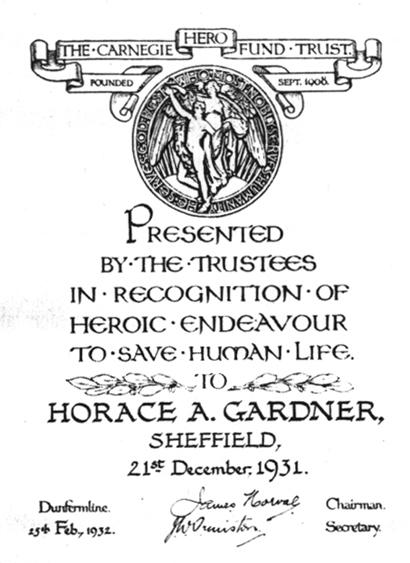
FIVE MEN'S BRAVERY REWARDED
At a fatal accidents inquiry in Kirkcaldy
Sheriff Court on Saturday, Sheriff Armour Hannay presented the
Carnegie Hero Fund certificates and £10 each to Colin Campbell
Mackay, underground manager, Pannie Pit, Kirkcaldy, and John
Foster, miner, March Street, Kirkcaldy, in recognition of their
bravery in the pit on 18th December last. A fall from
the roof, estimated at about 20 tons, came away at midnight,
burying one of the men underneath, while another was caught by the
feet. In order to effect the rescue of a man named Thomson it was
necessary to burrow underneath the fall, and even then he could
only be got out by Mackay and Foster taking hold of him, while
other workmen got Mackay and Foster by the legs and dragged them
into safety. It took four hours to extricate the unfortunate man,
who survived the accident by only a few days.
Mackay and Foster incurred great risk on account
of the danger of being overwhelmed in the fall. In making the
presentation, his Lordship said these gallant men were facing death
in one of its most terrible shapes. Mackay and Foster only acted
according to the splendid traditions of their class, for in his
Lordship's experience, the first thought of a Fife miner when
overtaken by a disaster was to rescue his comrade without a
moment's consideration of the risk to his own life.
 |
--------------------------------------------------------------------
"The Scotsman"
13 September, 1911
FIFE JURY ON MINING METHODS. - At Cupar yesterday, Sheriff Armour Hannay and a jury heard evidence in fatal accident inquiries. In regard to the death of William Glass, chain-runner, 70 Nairn Street, Pathhead, Kirkcaldy, which occurred on 8th August, as the result of an accident in No. 1 Pannie Pit, Kirkcaldy, belonging to the Fife Coal Company (Limited), evidence was led at considerable length. It seemed that deceased was engaged bringing the loaded hutches up the south dook when the coupling between the first and second broke away, and Glass was thrown off, sustaining fatal injuries. Mr Robinson, H.M. Inspector of Mines, said chain-running was one of the most dangerous occupations in mining. The percentage of accidents in that work was greater than in any other underground occupation. On that account he hoped the Sheriff would assist in the direction of getting rid of that kind of work. Advised by the Sheriff, the jury added the following rider to their formal verdict:- "In the opinion of the jury the deceased was engaged in very dangerous work, which should be discontinued in all mines as far as possible."
--------------------------------------------------------------------
"The Scotsman"
20 January, 1912
FATALITY AT KIRKCALDY PIT. - An accident occurred in Pannie Coal Pit, Dunnikier Colliery, Kirkcaldy, yesterday morning, which resulted in the death of John Linton (61), a pit repairer, residing in Kirkcaldy. He had been engaged in the underground workings repairing the roof, when a fall took place, and he was buried under about a ton of rubbish. Death seemed to have been instantaneous.
--------------------------------------------------------------------
"Cowdenbeath & Lochgelly Times"
21 February, 1912
Wm. Duncan (50), residing at Randolph Road, Gallatown, Kirkcaldy, was admitted to Kirkcaldy Hospital on Monday suffering from severe injuries to his back and also internally. The unfortunate man was badly crushed by a fall of coal from the roof of one of the underground workings in the Pannie Pit, Kirkcaldy, in the forenoon. His condition is somewhat serious.
--------------------------------------------------------------------
"Dunfermline Press"
22 June, 1912
EAST FIFE PIT FATALITIES
Two mining fatalities were investigated by Sheriff Armour-Hanney and a jury at Cupar on Tuesday. The victim in the first case was William Shepherd, miner, Kirkcaldy, who was killed at Lochhead Pit, Wemyss Coal Company, Ltd., on Saturday, 11 May. ... The other case had reference to the death of William McCormack, pithead worker, Sinclairtown, who met his end at the Pannie Pit on 22 May. The evidence brought out that deceased climbed over the guard railing, and in some manner unexplained got in contact with one of the revolving drums of the coal conveyors, and was crushed to death. In both cases formal verdicts were returned.
--------------------------------------------------------------------
"Cowdenbeath & Lochgelly Times"
26 June, 1912
An article in this issue covered the sad drowning of John McCormick (20), pit worker at Dunnikier, at Pathhead Sand, Kirkcaldy. It also stated that "Only about six weeks ago a younger brother of deceased, who had just commenced work in the Pannie Pit beside his brother and father, met with a distressing death at the pithead, being crushed amongst machinery which he had been examining." This victim was William McCormick (14), who died at the Pannie Pit, Dunnikier Colliery, on 22 May.
--------------------------------------------------------------------
"The Scotsman"
11 September, 1912
CRUSHED TO DEATH IN A KIRKCALDY PIT. - An accident occurred in Pannie Coal Pit, Kirkcaldy, yesterday morning, which resulted in the death of James Hay or Keddie (35), a miner residing in Kirkcaldy. Hay, with another workman named Christie, were employed in connection with the coal cutting machine in the parrot seam. They had just finished their meal between two and three o'clock in the morning, when a slip in the roof was observed, but after consultation the "place" was considered safe, and the men decided to proceed with their work. The machine had only proceeded about a yard when a huge stone came away from the roof, crushing Hay to the pavement. The "place" was so narrow where the fall occurred that in order to reach the body a road had to be cut through the waste, and explosives used, and several hours elapsed before the body was recovered. Deceased leaves a widow and six children.
--------------------------------------------------------------------
"Dunfermline Press"
9 November, 1912
A fatal accident occurred on Tuesday night at Pannie Pit, Dunnikier Colliery, Kirkcaldy, resulting in the death of James Forrest, a miner, who resided in St Clair Street. He was engaged brushing when a heavy stone fell from the roof, crushing him underneath, and causing instantaneous death.
--------------------------------------------------------------------
"The Scotsman"
26 August, 1913
BURNING ACCIDENT IN A FIFE PIT. - A serious burning accident took place at the Pannie Pit, Dunnikier Collieries, Kirkcaldy, yesterday, as the result of which William Jack (26), night under-ground manager, Ingleside, Kirkcaldy, and John Stewart, miner (39), 102 Mid Street, both lie in Kirkcaldy Hospital suffering from severe injuries. The accident occurred in the parrot coal section of the pit, where it is understood Jack, accompanied by Stewart, had gone to investigate, in consequence of complaints made regarding fire-damp in this part of the mine. The two men were in the vicinity of fire-damp when, through some cause, this had become ignited. Hearing their cries for assistance, several miners ventured into the section, and found them so badly burned about the face, arms, and hair that their immediate removal to hospital was necessary. Mr Jack, who holds a first-class certificate in mining, is a brother of the colliery manager.
--------------------------------------------------------------------
"Cowdenbeath & Lochgelly Times"
27 August, 1913
Two miners were injured in the Pannie Pit, Kirkcaldy, on Monday as the result of an explosion caused by firedamp. They were John Stewart, 105 Links Street, and William Dick, Smeaton Road, Kirkcaldy. Both men were badly burned about the face and arms, and were conveyed to Kirkcaldy Hospital, where they were detained.
--------------------------------------------------------------------
"The Scotsman"
6 July, 1914
FATAL MINING ACCIDENT AT KIRKCALDY. - On Saturday, in the Pannie Pits,
Kirkcaldy, two accidents took place, one of which terminated fatally. William Williams (27),
Links Street, while proceeding to the pit bottom in Pannie Pit No. 1, was buried beneath a
large fall of coal, and when extricated two hours later was found to be dead. He leaves
a wife and three young children.
Andrew Knight (43), Dunnikier Place, Kirkcaldy, in Pannie Pit No. 2, sustained severe injuries
to his hand through having it pressed between two heavy stones, and required to have a
finger amputated.
--------------------------------------------------------------------
"The Scotsman"
Tuesday 27 July, 1915
SEQUEL TO A KIRKCALDY MINING ACCIDENT. - In Kirkcaldy Sheriff Court yesterday,
Sheriff Umpherston issued his interlocutor in an action at the instance of Mrs Annie Bollan
or Hill, 27 Nicol Street, Kirkcaldy, who, on behalf of herself and six children, claimed
compensation from the Fife Coal Company, for the death of her husband, William Hill, miner.
Hill was engaged in Pannie Coal Pit, Kirkcaldy, on the morning of 25th December last driving a
heading into an old working, when he was caught by a rush of water and carried down the
level, sustaining bruises about the body, in addition to his clothing being soaked with water.
He was confined to bed until 30th December, and the following day he went to the colliery
office with a doctor's certificate. That night he became very ill, and the next morning
he was found to be suffering from pneumonia, from which he died on 8th January. His Lordship
said the only point was whether Hill's death resulted from the accident on 25th December.
He found that death was due to pneumonia due to a chill. There was no doubt Hill suffered a
very severe chill on 25th December, but there was no evidence that he received a chill at all
when he went out on 31st December. Discussing whether Hill's going out on the 31st
December was a novus actus interveniens, his Lordship stated that in the present
case neither Hill nor the doctor knew that he had pneumonia on 31st December. He went
out, not for his own pleasure or against doctor's orders, but to comply with a request
from the respondents by furnishing them with a medical certificate, and having done that, he
returned home again. That, in his Lordship's view, was not a novus actus at all.
He awarded claimant compensation to the amount of £289, 11s. 4d., and found respondents
liable to the claimant in expenses.
--------------------------------------------------------------------
"Dunfermline Press"
27 May, 1916
George Blyth, a Kirkcaldy miner, residing at 176 Overton Road, received severe injuries in the Pannie Pit, Kirkcaldy, on Wednesday. He had just prepared a fuse for firing a shot, and had got a considerable distance off, when the shot exploded, and a piece of stone struck him on the back, badly bruising it, and fracturing a rib on his right side.
--------------------------------------------------------------------
"West Fife Echo"
8 December, 1920
COWDENBEATH MINER'S DEATH
As the result of an explosion which occurred in the Pannie Pit, Dunnikier Colliery, Kirkcaldy, early in the week, Peter Gardiner (45), a married man residing temporarily at 7 Rosslyn Street, Kirkcaldy, has succumbed in Kirkcaldy Hospital. A native of Cowdenbeath, the deceased went to Kirkcaldy, some months ago from England, where he was last employed.
---------------------------------------
"The Scotsman"
28 February, 1921
DISMISSAL AT FIFE PITS.
LEVY ON WORKERS.
At a special meeting at Dunfermline on Saturday of the Executive Board of the Fife, Kinross,
and Clackmannan Miners' Association, a discussion took place with regard to the large
amount of unemployment in the pits of the counties. At Dunnikier Colliery, Kirkcaldy, it was
reported, 200 men had been dismissed, and at Dysart Colliery the services of 100 men had
been dispensed with. There had also been dismissals at other collieries.
With a view to alleviating the prevalent distress, the Executive recommended to the favourable
consideration of the members the imposition of a voluntary levy. The suggestion was that each
man should contribute a sum of sixpence per shift, and the hope was expressed that it would be
possible to collect the contributions at the colliery offices.
-------------------------------------------------
"The Scotsman"
26 September, 1921
THE THREATENED CLOSURE
OF A FIFE PIT.
MEN AGREE TO MONTH'S TRIAL OF
OWNERS' CONDITIONS.
At the monthly meeting of the Executive Board of the Fife, Kinross, and Clackmannan Miners'
Association at Dunfermline on Saturday, a report was submitted of the negotiations which had taken
place with regard to the threatened stoppage of the Fife Coal Company's Dunnikier Colliery,
Kirkcaldy. Three interviews, it was stated, had been held during the week between the heads of the
Company and representatives of the men. The result of these was that certain rates of wages had
been proposed by the Company and accepted temporarily for one month by the men, in order to avert
the danger of a stoppage at the colliery, where 800 persons are normally employed.
Mr William Adamson, M.P., the general secretary, reported an interview he had had with the
umpire under the National Unemployment Insurance Act with regard to the question of men who
had not yet been able to resume work. The report showed that the umpire had favourably decided
the claim of the men still unemployed at the Mary Pit, Lochore, the settlement, so far as these men
were concerned, representing a lump sum payment of £9 per adult member.
-------------------------------------------------
"Dunfermline Press"
29 October, 1921
An accident occurred at Pannie Pit, Kirkcaldy, on Monday, resulting in the death of one of the employees and the severe injury of another. While on his rounds, a fireman noticed a weakening in the structure supporting the roof of one of the cuttings, and conveyed the news to the foreman on duty, who immediately dispatched four men to effect repairs. While they were thus engaged two of the beams gave way, crushing two of the workers underneath. The other men raised the alarm, and help was at once forthcoming. It was discovered that in the case of Robert Traill, 7 Orchard Lane, Dysart, the accident had proved fatal. The other man, George Burt, 36 Viceroy Street, Kirkcaldy, was found to be badly crushed, and was immediately removed to the hospital to receive treatment. The deceased, who was about 46 years of age, leaves a widow and five of a family.
-------------------------------------------------
"DUNDEE ADVERTISER"
SEQUEL TO A
KIRKCALDY PIT FATALITY
October, 1921
PLEA FOR MORE CONSIDERATE
TREATMENT OF THE DEAD
A feeling of strong resentment has been created in the mining
community of Dysart over the manner of conveyance home of the body
of a miner named Traill, who was killed in the Pannie Pit,
Kirkcaldy, last week. The allegation is that the body was laid upon
a coal lorry, covered by a blanket, and driven through the streets
of the town in broad daylight for a mile and a half, the distance
between the pit and the deceased man's residence.
The Rev. Hugh Menzies, minister of the First Charge at Dysart, who
has been the means of attracting public attention to the matter, was
interviewed on Saturday by a "Dundee Advertiser" -
representative. He
had, he said been summoned to the bereaved home to await the coming
of the corpse. He understood that the body would be conveyed to the
house by an ambulance waggon, and therefore when a coal lorry stopped
at the door he paid no attention to its arrival until some one
informed him that the body was lying on the lorry. He looked out of
the window and saw a form on the lorry, only covered by a blanket.
The shape of the body was apparent from the covering, which was so
slight that a gust of wind could have blown it off the body on the
journey. When the body was brought into the house it was found that
it was in the same condition as when the accident occurred, and bore
all the traces of the mine.
Some time ago, Mr Menzies continued, he was called at midnight to a
house, a young inmate of which had been killed during the nightshift
at the local pit. In this instance, the body was brought in an
ambulance. It had, however, to be carried up a somewhat awkward
entrance and the blood which had gathered beneath the body on the
stretcher actually dripped on the steps of the stair.
"These
fatal accidents," said Mr Menzies, "are usually sufficiently
tragic and painful without having these unseemly and gruesome details
added. A little more considerate treatment of the dead would do
something to temper the severity of the blow which in our mining
districts falls so heavily on so many, and be appreciated by the men
among us who daily risk their lives to minister to the comforts of
others."
The suggestion of Mr Menzies is that a proper conveyance should be
provided to meet emergencies and that a mortuary be arranged for, so
that when a fatal accident occurs, the body could be taken there,
washed and dressed and coffined, before being conveyed to the
family.
-------------------------------------------------
"Fife Free Press"
9 October, 1926
"A good deal of water has risen in the Dunnikier pit during the strike, and it is not expected to open for some time. ..."
-------------------------------------------------
"The bing of the Pannie Pit."
"This was removed during the mid 1960s and as a pupil
at Pathhead Primary School during that era, I can remember a steady
stream of tipper trucks belonging to a Windygates-based haulage
contractor passing by the playground at break-time and full of the
bing material. I understand that this spoil was used as road bottoming
on the Standing Stane Road (this last point may have been anecdotal).
"
Alan Simpson, Kirkcaldy.
-------------------------------------------------
