Owners:-Capledrae Gas Coal Company
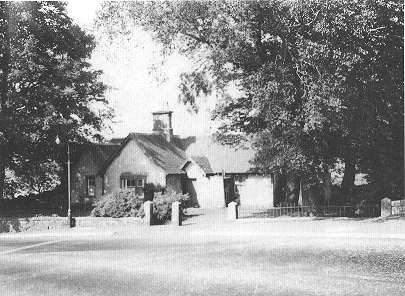
It is still possible to imagine the old Flockhouse pit lying in the rough ground with its small, grass-covered bing located just to the west of Capledrae Farm and about a quarter of a mile east of the main Lochgelly-Ballingry road opposite the end of Malcolm Street, Ballingry.
 |
 |
The Flockhouse Pit is known to have been sunk there to the cannel coals of the Capledrae coalfield, by the local Gas Coal Company, but the exact date is not known. It is believed to be around 1860, about the same time as the Manorleys Pit, south of Kirkness, and probably before the Squirrel Pit, located further east to the north of Westfield. The pit was probably abandoned in 1888 when serious water problems featured in the old and extensive workings of the Capledrae field.
Some information on the coals worked at, or near, Flockhouse Pit, Capledrae (based on a report from 1900)
The working of the Capledrae field was apparently expensive and troublesome due to disruptions by some powerful faults and invasive whinstone. Some of the coals were of poor quality owing to an original intermixing of impurities at the time of deposition of the coals. For example, the quality of the Capledrae Parrot Coal, which was found to be excellent towards the Rosewells portion of the field to the south, fell off in value towards the north, around the Flockhouse Pit, because of the appearance in the coal of clay galls* which seriously reduced the gas-producing properties of the coal. A second gas-coal, known as the Wee Parrot, lay 14 fathoms below the Capledrae seam and was worked here, to a small extent, on either side of an anticlinal fold along the centre of which the coal cropped out.
* A gall is a narrow vein of whinstone intersecting layers of coal.
A section measured at the working face gave the following details:
| Coals at the working face of Flockhouse Pit, Capledrae | |
| blaes | -- |
| Coal, cherry | 7 in. - 1 ft. 6 in. |
| Stone | up to 6 in. |
| Coal, inferior gas | 6 in. - 8 in. |
| Coal, gas | 1 ft. - 2 ft. 2 in. |
| Fireclay | -- |
A second gas-coal, known as the Wee Parrot, lay 14 fathoms below the Capledrae seam and was worked here, to a small extent, on either side of an anticlinal fold along the centre of which the coal cropped out.
| See the Glossary in the Coal Seams section of the website for more mining terms likely to be encountered in reports. |
|---|
|
Few additional details are unlikely to be uncovered
about this pit or the seams worked, however, a brief
report of the coals of the 19th century Capledrae coal
field is in preparation to supplement this entry.
|
|---|
